When Society Becomes Its Own Enemy
Canadian Metalcore Force
KILLED BY SORROW
interviewed by Fok ‘bs’
“The way we consume and listen to music has changed drastically over the past years; streaming and availability are now the standard.”

“Bands now only do singles, and listening to the whole album has become rare.”

“We wanted each track to have its own identity, so the emotion always came first and the riffs had to support that.”
“If the music feels honest and everyone in the band connects with it, then I see that as an evolution of Killed By Sorrow rather than becoming something else.”
“Sometimes it’s about restraint and creating space for a feeling to sink in.”
“At some point, every artist has to decide whether they’re chasing attention or trying to create something meaningful.”

“The world we build collectively shapes our relationships, our mental health, and our sense of self.”
“When you’ve experienced betrayal or had people let you down, you develop a much deeper appreciation for the people who consistently show up and have your back.”
“Sometimes the strongest thing you can do is keep fighting, and sometimes it’s accepting that it’s time to move on.”
“A lot of people dream about escape, but once you’re free, nobody hands you a roadmap.”
“There’s uncertainty, responsibility, and sometimes even fear.”
“Breaking the chains is only the first step.”
“’Empire of Excess’ is really about chasing more and more, only to discover that it never fills the void.”
“If you finally get everything you thought you wanted but still aren’t satisfied, then the cycle just continues.”
“Real freedom comes when you stop letting those external things define your happiness or your worth.”
In a world where everything seems to move faster, where yesterday’s achievements are forgotten in the pursuit of tomorrow’s distractions, the question is no longer simply how much we can obtain, but how much we are prepared to sacrifice in the process.
For Killed By Sorrow, that contradiction lies at the heart of ‘Empire of Excess’, an album that examines the consequences of a society driven by consumption, competition, constant visibility and the seemingly endless desire for more.
Yet the album’s concerns extend far beyond social criticism.
Betrayal, anxiety, death, regret, friendship and the struggle to regain control of one’s life form an equally important part of its emotional landscape.
Musical aggression is balanced by moments of restraint, while changes in tempo and atmosphere allow each song to develop its own character.
From the relentless urgency of the title track to the darker, more melodic weight of ‘The Burial’, the music follows the emotions rather than forcing them into a predetermined formula.
The creative involvement of Marty Bersier Carpentier has also introduced new perspectives into the band’s songwriting, although the underlying identity of Killed By Sorrow remains rooted in authenticity rather than stylistic restrictions.
Songs such as ‘Never Give Up’, ‘All My Brothers’ and ‘Killed By Sorrow’ explore resilience, loyalty and the possibility of moving beyond painful experiences, while ‘Unchained’ and ‘Stay In Line’ examine the complicated relationship between freedom and responsibility.
In this interview by Fok ‘bs‘, Samuel Ham, rhythm guitarist of Killed By Sorrow, discusses the changing relationship between music and consumption, the permanent damage caused by betrayal, the emotional power of restraint, the difference between perseverance and knowing when to walk away, and why true freedom may have less to do with obtaining everything we desire than with discovering what we no longer need.
‘Empire of Excess’ describes a society constantly demanding something new until consumption itself becomes a kind of emptiness.
Do you think the same problem exists within music, where bands and listeners are under pressure to constantly produce and consume new material before they have even absorbed what came before?
“The way we consume and listen to music has changed drastically over the past years; streaming and availability are now the standard. I feel that we have lost the connection to artwork, physical albums, and just being the first one in the record store. Bands now only do singles, and listening to the whole album has become rare.”
The title track begins with a prominent bass line and eventually becomes the fastest song on the album.
Was that acceleration deliberately connected to the subject, almost as if the music itself becomes trapped in the same cycle of wanting more, faster and immediately?
“Choosing a title track is never easy, as we had some very solid pieces on this album, but I think that ‘Empire of Excess’ reflects best the society we now live in. Fast, craving new and discarding the old.”
Your album deals with excess on a societal level and betrayal, anxiety and regret on a personal level.
Do you see those as separate subjects, or can a society built around constant pressure, competition and consumption also change the way people treat one another privately?
“They’re absolutely connected. The world we build collectively shapes our relationships, our mental health, and our sense of self. The album explores the human cost of those pressures.”
‘Betrayal’ deals with repeated lies until trust finally collapses.
What is more difficult to express musically, the explosive moment when someone discovers the truth, or the quieter realization afterwards that they may never trust that person in the same way again?
“I’d say the aftermath. The initial shock and anger almost write themselves, but the harder part is expressing what comes next, when you realize the damage is permanent and you can’t look at that person the same way anymore.”
‘The Burial’ slows the album down and approaches death through a darker, more melodic atmosphere.
Did writing that song teach you that heaviness sometimes has very little to do with speed, distortion or breakdowns, and much more to do with what you deliberately leave space for?
“Absolutely. ‘The Burial’ taught us that heaviness isn’t always about playing faster or hitting harder. Sometimes it’s about restraint and creating space for a feeling to sink in. The slower pace and darker atmosphere let the weight of the lyrics breathe in a way that constant intensity couldn’t.”
‘Never Give Up’ carries a message of resilience, but there are situations in life where refusing to give up can become destructive, and walking away is actually the healthier decision.
Where do you personally draw the line between perseverance and refusing to accept that something is over?
“I think perseverance becomes unhealthy when you’re holding on to something that no longer has a future just because you’re afraid to let it go. Sometimes the strongest thing you can do is keep fighting, and sometimes it’s accepting that it’s time to move on. Knowing the difference is one of life’s hardest lessons.”
Marty Bersier Carpentier has played an important role in expanding the band’s songwriting.
When somebody introduces ideas that begin changing the musical vocabulary of an established band, how do you decide whether you are expanding the identity of Killed By Sorrow or gradually becoming something else?
“Honestly, I don’t think we’ve ever looked at it as protecting a specific formula. Marty brought new ideas and a different perspective, but the songs still feel authentic to who we are. If the music feels honest and everyone in the band connects with it, then I see that as an evolution of Killed By Sorrow rather than becoming something else.”
The album deliberately changes tempo, atmosphere and musical language depending on the subject of each song.
Did you ever reject an excellent riff simply because it expressed the wrong emotion for the story you were trying to tell?
“Definitely. One thing we learned during the writing process is that a riff can be great on its own but still be wrong for the song. We wanted each track to have its own identity, so the emotion always came first and the riffs had to support that.”
‘All My Brothers’ sits on an album filled with betrayal, death, anxiety and struggle.
Does friendship become more meaningful to write about when it is surrounded by darker subjects, and is loyalty perhaps something we only fully understand after experiencing its opposite?
“Yeah, I think so. When you’ve experienced betrayal or had people let you down, you develop a much deeper appreciation for the people who consistently show up and have your back. ‘All My Brothers’ is really a celebration of those relationships and the bond that comes from going through life together.”
‘In The Spotlight’ is an interesting title in an age where being visible has almost become an obligation.
Do you think the desire to be seen, followed and constantly noticed is another form of the excess explored on the album, particularly for musicians who are expected to turn themselves into content as well as create music?
“Absolutely. There’s more pressure than ever to be visible and constantly engage people. For musicians, that can sometimes feel like another form of excess. ‘In The Spotlight’ explores that feeling of being exposed, judged, and wondering if you’ll meet expectations, while still finding the confidence to be yourself and let the music speak. At some point, every artist has to decide whether they’re chasing attention or trying to create something meaningful. ‘In The Spotlight’ lives in that tension.”
There is a song called ‘Killed By Sorrow’ on the album.
What made this the right moment to finally put the band’s own name on a song, and did doing so create pressure to write something that somehow explains what Killed By Sorrow means beyond simply being a band name?
“Honestly, there wasn’t a grand plan behind it. As we were writing the album, that song ended up capturing a lot of the themes that have always been part of Killed By Sorrow, things like struggle, regret, resilience, and ultimately finding the strength to move forward. Once it took shape, it just felt like the right song to carry the band’s name. And yeah, I think putting the band’s name on a track naturally creates a bit of pressure. Not because it has to explain everything about Killed By Sorrow, but because it should represent the spirit of what the band is about. For us, that isn’t the sorrow itself; it’s overcoming it.”
‘Unchained’ and ‘Stay In Line’ appear next to each other at the end of the record and almost sound like opposing commands, one demanding freedom and the other obedience.
Was that contradiction intentional, and what happens psychologically when someone finally breaks free but discovers that freedom itself comes without instructions?
“Yeah, I think that contrast was intentional, even if we didn’t sit down and say, ‘let’s write opposing songs’. Unchained is about wanting to break free from something that’s slowly destroying you, while ‘Stay In Line’ is about living with the consequences of choices that leave you feeling trapped. They’re coming at struggle from different angles. And I think you’re right about freedom. A lot of people dream about escape, but once you’re free, nobody hands you a roadmap. There’s uncertainty, responsibility, and sometimes even fear. Breaking the chains is only the first step. Figuring out who you are afterwards can be an entirely different challenge.”
If ‘Empire of Excess’ is ultimately about people trying to regain control in a world constantly demanding more from them, what would be the greater victory for the person who reaches the end of the album, finally obtaining everything they thought they wanted, or discovering that they no longer need it?
“I think the greater victory is realizing you no longer need it. ‘Empire of Excess’ is really about chasing more and more, only to discover that it never fills the void. If you finally get everything you thought you wanted but still aren’t satisfied, then the cycle just continues. Real freedom comes when you stop letting those external things define your happiness or your worth. That’s when you actually take back control.”
Throughout ‘Empire of Excess’, Killed By Sorrow confront a world in which the pressure to achieve, consume, compete and remain visible can gradually undermine the very things that make life meaningful.
What begins as a criticism of society becomes something considerably more personal, revealing how those same pressures influence relationships, emotional stability and the way individuals understand their own worth.
Samuel Ham’s reflections also demonstrate that musical heaviness cannot be measured simply through speed or aggression.
Sometimes the most powerful expression comes from allowing a feeling enough space to develop, just as the most difficult consequences of betrayal emerge long after the initial anger has passed.
The band’s willingness to let each song follow its own emotional direction gives the album a broader vocabulary without sacrificing the authenticity that defines its identity.
But perhaps the most significant thread running through the conversation is the distinction between strength and stubbornness, between freedom and escape, and between pursuing something meaningful and endlessly chasing what society tells us we should want.
Perseverance may demand that we continue fighting, but it can also require the courage to recognise when something has reached its end.
Similarly, breaking free from a destructive situation does not automatically provide the answers needed to build a different life.
Ultimately, ‘Empire of Excess’ offers a perspective that goes beyond its darker themes.
Betrayal can deepen our understanding of loyalty, sorrow can become the starting point for resilience, and freedom can emerge not from possessing more, but from refusing to let external expectations determine our happiness.
For Killed By Sorrow, overcoming sorrow is more important than simply describing it.
And in a world that constantly demands more, perhaps the greatest act of independence is finally deciding that enough is enough.
by Fok ‘bs‘
Canadian Metalcore Group
KILLED BY SORROW
Set To Release Album
‘Empires of Excess‘
track-list:
The End is Near
Empire of Excess
The Burial
Betrayal
Never Give Up
All My Brothers
In The Spotlight
Killed By Sorrow
Unchained
Stay In Line
recorded, mixed and mastered by Maxime Lacroix @ House of Gain Studio
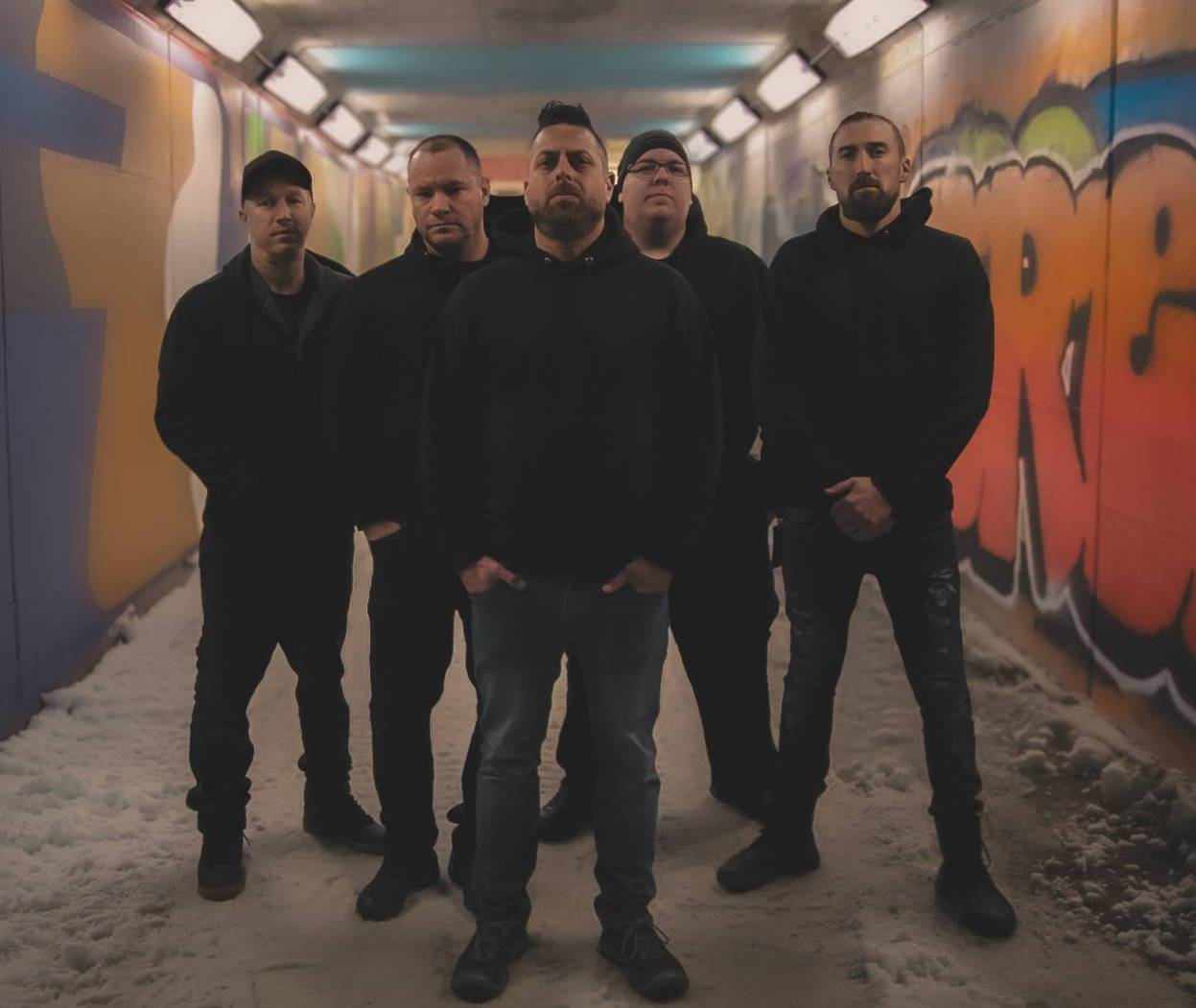
Killed by Sorrow are:
Sébastien Mailloux – vocals
Martin Bersier-Carpentier – bass
Tommy Forand – lead guitar
Samuel Ham – rhythm guitar
Mathieu Lassonde – drums
Metal Institute of Thrashology (2026):
“Canadian underground hardcore punks in Killed By Sorrow’s newest single, Betrayal, definitely stays loyal to the metalcore scene by actually sounding like thrash metal tones mixed with a hardcore punk grit and attitude. Heavily distorted rhythms sound closer to your traditional hardcore, but paired with your traditional style of hardcore punk vocals, Betrayal lets you know not to cross Killed By Sorrow. Huge basslines underneath and in-the-pocket drumming made this one an interesting approach in a crowded metalcore genre, and it’s more than worth a few listens.”
discography:
album

album
Montreal metal outfit Killed By Sorrow will release their new album, ‘Empire of Excess‘, on October 23rd, 2026, delivering ten tracks that combine metalcore, thrash, progressive metal and punk with a strong balance between aggression and melody.
The record moves through different tempos and moods while maintaining an emotional intensity that connects its heavier moments with its more melodic side.
‘Empire of Excess‘ represents a refinement of the band’s sound rather than a departure from it.
Heavy riffs, breakdowns and fast passages remain at the foundation, but the arrangements have become more atmospheric and deliberate.
Bassist Marty Bersier Carpentier has also played an important role in shaping this direction, bringing new elements into the band’s songwriting and helping expand its musical range.
The title track captures one of the album’s central concerns.
Beginning with a prominent bass line before developing into the fastest song on the record, ‘Empire of Excess‘ examines a society consumed by the constant desire for something new.
Endless consumption gradually becomes emotional emptiness, while the accumulating waste serves as a symbol of a culture losing sight of anything meaningful.
First single ‘Betrayal‘ approaches the album from a much more personal direction.
Built around heavy guitar riffs and a powerful breakdown, the song explores the destruction of trust through lies and repeated betrayal, following the emotional damage until the point where the deception can no longer be endured.
Elsewhere, the band deliberately change the atmosphere rather than repeating the same formula.
‘The Burial‘ slows things down with a darker and more melodic approach centred on death and inevitability, while ‘Never Give Up‘ introduces a punk influence and turns towards resilience, determination and the refusal to surrender when confronted by adversity.
That variety is an important part of ‘Empire of Excess‘.
Its ten songs deal with subjects ranging from social excess and personal betrayal to death, friendship, anxiety, regret and the struggle to regain control of one’s life.
Rather than presenting these ideas through a single musical approach, Killed By Sorrow allow the pace, weight and melody to shift with the subject of each song.
With ‘Empire of Excess‘, Killed By Sorrow have created a record designed as a complete journey rather than a collection of songs built from the same template.
Heavy when it needs to be, melodic when the material demands space.