Turning Chaos Into Movement
Benjamin Frenzel Discusses
YEAST MACHINE’s
Raw New Chapter
With Fok ’bs’

“When a song makes us move in the rehearsal room, chaos has officially become music.”

“We record live, with all instruments together and without a click track, because we want the album to feel alive.”
“Bad Milk is the forbidden substance that’s bad for you, addictive, and hopefully tastes great.”
“We grew up with Nirvana. That raw and dirty approach should never disappear.”
“We fight over parts, but never for power. The better idea always wins.”
“Without silence, noise loses its value.”
“Thunder, lightning and an old steam locomotive – that’s probably the best description of our sound.”
tour 2026:
Jun12th Ract! Festival Tübingen/GER
Jun13th Wasted! Open Air Obernzenn/GER
Jun26th Altstadtfest Trier Trier/GER
Jul25th Doomstone Open Air Schwaan/GER
Aug1st RockXplosion Festival Leonberg/GER
Aug9th Trafostation 61 Festival Frechen/GER
Stoner grooves, grunge attitude, raw energy and a healthy disregard for polished perfection:
German five-piece Yeast Machine have quickly carved out a reputation for turning controlled chaos into something irresistibly physical.
With their new album ‘Bad Milk‘, the band pushes further into dirty riffs, instinctive songwriting and an approach that values human imperfections over sterile precision.
In this conversation with Fok ’bs’, vocalist Benjamin Frenzel talks about turning noise into songs, the importance of movement, the influence of Nirvana, creative battles inside the band, and why sometimes the best way to avoid overproduction is simply running out of time.
Your music is often described as a mixture of chaos and groove.
Where exactly does the moment happen in the rehearsal room when noise suddenly becomes a ‘song‘?
“That moment can take weeks or just half an hour. Sometimes it never comes at all. Usually, we start with a small idea – a riff, a three-chord chorus – and try to build something special around it. When we reach a promising point, we turn off the lights, imagine ourselves on stage, and if the song makes us move, then chaos has become a song.”
If your songs were physical beings, what body parts would they have, and which ones would constantly rebel?
“Probably more legs than brains. We try to write music that people don’t need to hear ten times before they understand it. We want the legs to know what to do immediately. At the same time, songs still need to surprise people, so the brain rebels every now and then and tries to throw listeners off balance – ‘like in ‘Feeding Poison to the Spiders Was Never Really My Thing’, one of the less straightforward tracks on ‘Bad Milk’.”
‘Bad Milk‘ sounds like something that should no longer be good, but somehow still exists.
What is the idea behind that image?
“Not only does it still exist, it hopefully tastes good too. ‘Bad Milk’ is the forbidden, evil substance that is probably not good for you, but is meant to be addictive – and above all, fun.”
You write songs as a five-piece.
Are decisions made democratically, or does creativity sometimes emerge through musical power struggles?
“Struggles, yes. Power struggles, no. We often disagree and fight for certain parts, but we’re always willing to be convinced by the better idea. In the end, the final result is all that matters. With five people involved, there will always be compromises, otherwise nothing would ever get finished.”
What role does silence play in your music – something deliberate, or something you’re constantly trying to avoid?
“On ‘Bad Milk’ it plays a smaller role than it did on our debut album, but it is still very important. Without silence or calm moments, noise loses its value. Loudness only works through contrast.”
Is there a song on any of your releases that feels completely different live today than it did when you originally wrote it?
“No, because we always write songs with their live performance in mind. If a song doesn’t work live, we stop playing it pretty quickly – and that’s okay. Some songs are simply meant to exist only on the record.”
Your music has a distinctly dirty character.
Is that dirt an accident or a carefully maintained part of your identity?
“It’s definitely intentional. We grew up with Nirvana, who sounded much rougher and dirtier than most of the bands that came afterward. We don’t want that approach to songwriting and production to disappear. We also record live, with all instruments playing together and without a click track, because we want the record to feel alive.”
If you weren’t allowed to describe your sound through genres, which three everyday sounds would replace them?
“Thunder and lightning – does that already count as two? I also often imagine an old train. Not a modern one, but a steam locomotive that never gets tired.”
You come from Tübingen, a city not immediately associated with stoner or grunge music.
Has that environment shaped your sound, or worked against it?
“Tübingen is a very special place. Here, you can basically bring anything from the rehearsal room to the stage, as long as it’s fun and makes people move. This open-minded attitude toward live music beyond genre boundaries gave us the confidence to take our music to other cities as well.”
Has there ever been a riff or musical idea that you consciously abandoned because it worked almost too well?
“If something works too well, it can sometimes mean it’s boring because it doesn’t create any friction. That happens to us from time to time, although less often nowadays.”
Your songs often carry a strong physical energy.
How much do you think about the audience’s bodies when you’re writing?
“Maybe not when the first idea appears at home on an acoustic guitar, but definitely once we’re in the rehearsal room and the drums come in. From that point on, always.”
If ‘Sleaze‘ was the first major step and ‘Bad Milk‘ represents the next stage, what emotional element has been lost, or gained, between those two albums?
“‘Sleaze’ was more laid-back and contained more quiet, almost enchanting moments. ‘Bad Milk’, on the other hand, feels like a more aggressive, permanently-high state of mind. We also thought carefully about which songs and energies were still missing from our live set, because we combine tracks from both albums on stage. In our view, the two records complement each other perfectly. Whatever is still missing will be on album number three, which is already in the works.”
What is something about Yeast Machine that nobody could ever learn from the songs themselves, but that is essential to how the band sounds?
“That we always end up running out of time during the final stages of recording. It can be mentally exhausting, but it also prevents us from overproducing things. That said, we’ll definitely leave ourselves more buffer time for the next album. You’re allowed to learn from experience.”
Whether it’s transforming rough ideas into groove-driven anthems, preserving the dirt and danger of live performance, or refusing to polish away the human element, Yeast Machine remain committed to making music that is felt before it is analyzed.
‘Bad Milk‘ captures a band that trusts instinct, embraces friction and understands that sometimes the most memorable moments emerge from controlled disorder.
If this album is any indication, the next chapter is already taking shape – and according to Benjamin Frenzel, album number three is well underway.
by Fok ‘bs‘
YEAST MACHINE
Stoner-Grunge From Germany
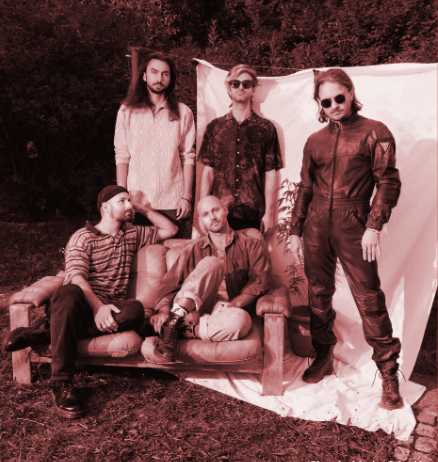
Yeast Machine are:
Fabian Köninger – guitar, voc
Tobias Köninger – guitar, voc
Benjamin Frenzel – vocals
Jonas Bischof – drums
Marcel Gundlach – bass
discography:

EP

album
album
ROCKHARD:
“And when the hooks hit,… everything else doesn’t even matter. Your spine starts listening too, and as we all know, it has no sense for subtleties.”
ECLIPSED:
“It rocks irresistibly straight ahead without compromise, topped with catchy noise guitars.”
BRUTSTATT:
“With ‘SLEAZE’, Yeast Machine deliver an epic heavy rock album that’s already one of the highlights of my music year.”
Hailing from Tübingen in southern Germany, Yeast Machine have rapidly emerged as one of the most exciting new names in the country’s underground rock scene.
Blending elements of stoner rock, grunge, punk, and alternative heaviness into a sound that is both raw and strangely addictive, the five-piece deliver music that feels dirty, loud, hypnotic, and bursting with energy.
Crunchy guitar riffs collide with infectious hooks, while charismatic vocals and an unmistakable groove give the band a character entirely their own.
Since forming in 2021, the band have steadily built a reputation through intense club shows and festival appearances across Germany, Austria, and Switzerland, winning over audiences with sheer energy and a rare sense of authenticity.
Yeast Machine are not interested in polished perfection.
Their songs thrive on friction, on contrasts between raw aggression and infectious melody, between dirty guitar walls and unexpectedly memorable hooks.
That chemistry comes from the way the band write together.
With five musicians constantly shaping and reshaping ideas, the music evolves naturally into something bigger than its influences.
You can hear traces of ’90s grunge, flashes of desert rock, and the swagger of classic alternative rock, but Yeast Machine never simply imitate the past.
Instead, they twist those familiar elements into something distinctly their own.
After first making noise with the ‘Behind The Dead‘ EP in 2021, the band truly broke through with their debut album ‘SLEAZE‘ in 2024, earning praise throughout the German underground rock scene.
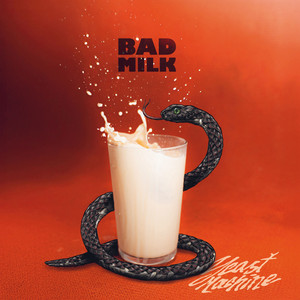
Now, with their second full-length album ‘BAD MILK‘, released via Berlin-based independent label Noisolution, Yeast Machine take another major step forward.
Compared to their debut, ‘BAD MILK‘ sounds leaner, sharper, and more direct without losing the band’s raw spirit.
The songwriting cuts deeper, balancing heavy grooves and driving rhythms with moments of melancholy and restraint.
Songs like ‘Falling Rocks‘ and ‘Dust On The Radio‘ hit with relentless force, while tracks such as ‘Karthago‘ and ‘The Golden Cage‘ reveal a more fragile and atmospheric side beneath the distortion.
At the center of it all stands a charismatic vocal performance carrying faint shades of Jim Morrison, surrounded by massive guitars that feel ready to collapse in on themselves at any moment.
It is messy in the best possible way.
Contemporary alternative rock that sounds alive, dangerous, and refreshingly human.
With ‘BAD MILK‘, Yeast Machine are not trying to recreate the past.
They are taking the spirit of heavy, rebellious rock music and dragging it forward into something new, louder, and entirely their own.