
The New Wave Of British Heavy Metal produced some of the most important bands in the history of Heavy Metal.
Iron Maiden became a global institution.
Def Leppard conquered America.
Saxon became one of the most enduring symbols of British Heavy Metal.
And then there were Tygers Of Pan Tang.
A band that had the songs, the musicians, the energy and, for a brief moment, seemingly everything necessary to stand alongside the biggest names of their generation.
Their story is one of the most fascinating tales of the NWOBHM.
It is a story about young musicians emerging from the North East of England, about a debut album filled with raw energy, about the arrival of one of the finest guitarists of his generation, and about a band that appeared to be heading straight towards international success.
But it is also the story of what might have been.
Because while some of their contemporaries continued climbing towards arenas and stadiums, the Tygers somehow lost their way just as the doors to the biggest stages were beginning to open.
Yet more than four decades later, the name Tygers Of Pan Tang is still alive.
And the Wild Cat still has claws.
From Whitley Bay Into The Underground
The story began in the North East of England.
Tygers Of Pan Tang emerged from Whitley Bay, near Newcastle upon Tyne, during the late 1970s, when something was beginning to move underneath the surface of British Rock.
Punk had exploded across the country, shaking an established Rock scene that many young fans regarded as increasingly distant and bloated.
At the same time, another generation of musicians was rediscovering the power of the electric guitar.
They loved the heaviness of Black Sabbath, the aggression of Motörhead, the twin guitar attack of bands like Thin Lizzy and Judas Priest, but they wanted something of their own.
Something faster.
Something younger.
Something that belonged to them.
That movement would soon become known as the New Wave Of British Heavy Metal.
Tygers Of Pan Tang were right in the middle of it.
The early band was built around guitarist Robb Weir, alongside vocalist Jess Cox, bassist Richard ‘Rocky‘ Laws and drummer Brian Dick.
There were no giant stages waiting for them.
They played working men’s clubs and small venues, building their reputation the old fashioned way, one audience at a time.
And like so many of the bands that would define the NWOBHM, the Tygers initially had something that could not be manufactured by a record company.
HUNGER.

Tygers Of Pan Tang were not watching from the outside. They were part of it.
Tygers Of Pan Tang had become serious contenders
When The Wild Cat Was Let Loose
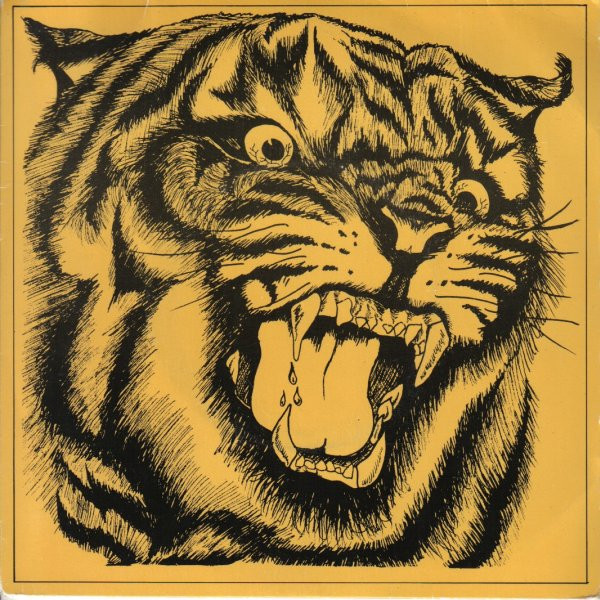
In 1979, the band released the single ‘Don’t Touch Me There’ through Neat Records, one of the labels that would become closely associated with the emerging North East Metal scene.
Then came the breakthrough.
In 1980, Tygers Of Pan Tang released their debut album, ‘Wild Cat’.
It was exactly what its title suggested.
Wild.
Hungry.
Unpolished.
There was still something dangerous about this new form of British Heavy Metal.
It had not yet become an international business.
Nobody knew which of these bands would survive, which would disappear, or which would eventually fill stadiums.
‘Wild Cat’ captured that moment perfectly.
Songs like ‘Euthanasia’, ‘Slave To Freedom’, ‘Suzie Smiled’ and ‘Wild Catz’ carried the rawness of a young band that had not yet been polished into something safe.
And people noticed.
‘Wild Cat’ reached number 18 in the UK Albums Chart.
For a young Heavy Metal band emerging from Whitley Bay, that was no small achievement.
The Tygers were suddenly moving.
During 1980 they found themselves sharing stages and touring with bands including Scorpions, Saxon, Def Leppard, Iron Maiden, Magnum and Gillan.
The British Heavy Metal explosion was happening in real time, and Tygers Of Pan Tang were no longer watching from the outside.
They were part of it.
“The problem was no longer whether the Tygers had the talent. They clearly did.”
One Guitar Was No Longer Enough
But something else happened during 1980 that would dramatically change the sound of the band.
Tygers Of Pan Tang decided they needed a second guitarist.
Around 80 guitarists were reportedly auditioned.
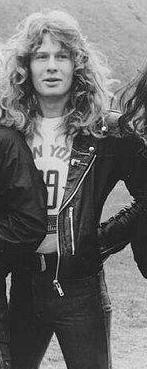
The man they chose was a young guitarist named John Sykes.
It would prove to be one of the most important decisions in the band’s history.
Sykes brought another dimension to the Tygers.
Suddenly Robb Weir had another powerful guitarist beside him, and the possibilities of the band expanded enormously.
The twin guitar attack became bigger, sharper and more sophisticated.
John Sykes would later become famous through Thin Lizzy, Whitesnake and Blue Murder, but before all of that, he was a Tyger.
His first major appearance with the band could hardly have been more dramatic:
the Reading Festival in 1980, in front of tens of thousands of people.
But while one important piece had been added, another was about to disappear.
“The raw Wild Cat had grown. Now it was ready to attack.”
Line up:
Jess Cox – vocals
Robb Weir – guitar
John Sykes – guitar
Richard ‘Rocky’ Laws – bass
Brian Dick – drums
“Rock history is not only written by the bands that eventually filled stadiums.”

by John Pentedekas
“They had the songs, the musicians, the energy and seemingly everything necessary to stand alongside the biggest names of their generation.”

Dezember 1980, Marquee, London
Goodbye Jess, Welcome Jon
The success of ‘Wild Cat‘ should have created stability.
Instead, the first major change arrived.
Jess Cox left the band.
For many young groups, losing the singer immediately after a successful debut album could have been fatal.
The vocalist is usually the face and voice that audiences associate with a band.
Tygers Of Pan Tang had to find a replacement quickly.
They found Jon Deverill.
And once again, what could have been a disaster became an opportunity.
Deverill was a very different vocalist from Cox.
His voice allowed the band to move into more melodic and technically ambitious territory.
Together with the addition of Sykes, the character of Tygers Of Pan Tang changed dramatically.
The raw Wild Cat had grown.
Now it was ready to attack.
“The raw Wild Cat had grown. Now it was ready to attack.”
Spellbound
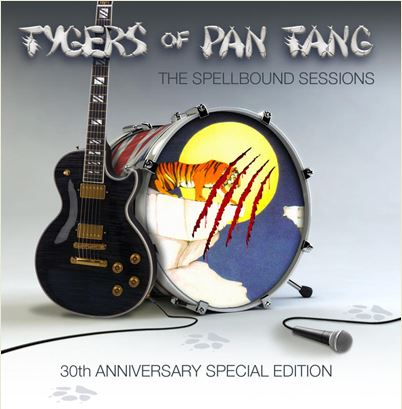
In 1981 came the album that many fans still regard as the defining moment of the classic Tygers Of Pan Tang.
‘Spellbound‘.
Produced by Chris Tsangarides, the album introduced both Jon Deverill and John Sykes to the Tygers’ studio sound.
And what a difference they made.
The rawness was still there, but now it was accompanied by greater precision, stronger melodies and a devastating twin guitar attack.
Songs such as ‘Gangland‘, ‘Take It‘, ‘Mirror‘, ‘Don’t Stop By‘ and especially ‘Hellbound‘ showed just how far the band had travelled in a remarkably short period of time.
This was no longer simply another promising NWOBHM band.
Tygers Of Pan Tang had become serious contenders.
The guitars of Weir and Sykes gave the songs both muscle and melody, while Deverill brought a new vocal dimension to the band.
For many fans, ‘Spellbound’ remains the moment when all the pieces fitted perfectly together.
Iron Maiden were rising.
Def Leppard were rising.
Saxon were already establishing themselves.
And Tygers Of Pan Tang seemed ready to follow them.
“For many fans, Spellbound remains the moment when all the pieces fitted perfectly together.”
Crazy Nights
There was hardly time to breathe.
Later in the same year, Tygers Of Pan Tang released another album.
‘Crazy Nights‘.
Think about that for a moment.
‘Spellbound‘ arrived in 1981.
‘Crazy Nights‘ arrived in 1981.
Today, bands can easily spend three or four years between studio albums.
Tygers Of Pan Tang were recording, touring, writing and releasing music at a furious pace.
The classic lineup of Deverill, Weir, Sykes, Laws and Dick was running at full speed.
Songs like ‘Do It Good‘, ‘Love Don’t Stay‘, ‘Never Satisfied‘, ‘Running Out Of Time‘ and ‘Raised On Rock‘ demonstrated a band with no shortage of ideas.
But perhaps the speed at which everything was happening was also beginning to take its toll.
Success had arrived quickly.
Expectations were growing even faster.
And soon another crucial change would alter the band’s direction.


John Sykes Leaves The Tygers
John Sykes was clearly a guitarist destined to attract attention.
His ability was impossible to ignore.
But his time with Tygers Of Pan Tang was short.
After ‘Crazy Nights‘, Sykes left the band.
He would go on to become part of Thin Lizzy and later play a crucial role in the hugely successful 1987 era of Whitesnake.
For Tygers Of Pan Tang, however, his departure meant replacing one of the musicians who had helped create the sound of their most celebrated period.
Fred Purser entered the band.
Once again, the Tygers moved forward.
But once again, they were changing.
The Cage And A Different Kind Of Success
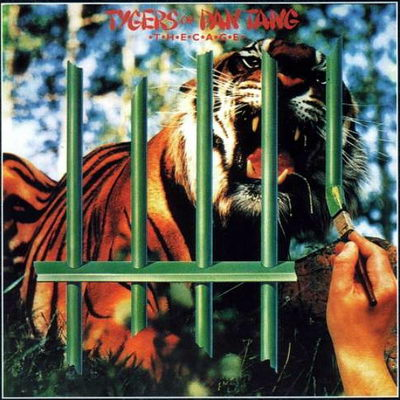
In 1982, Tygers Of Pan Tang released ‘The Cage‘.
The album represented another shift.
The sound became more polished and more melodic, moving away from some of the raw aggression that had characterized ‘Wild Cat‘ and even ‘Spellbound‘.
For some fans, this was evolution.
For others, something was being lost.
But commercially, ‘The Cage‘ gave the band some of its greatest success.
Their version of ‘Love Potion No. 9‘ became one of their best known songs, while ‘Rendezvous‘ and ‘Paris By Air‘ also reached the UK singles chart.
Ironically, just as Tygers Of Pan Tang appeared to have found a sound capable of reaching an even larger audience, the foundations underneath the band were beginning to crack.
The problem was no longer whether the Tygers had the talent.
They clearly did.
The question was whether the people surrounding them knew what to do with it.
The Band That Should Have Been Bigger
This is where the story of Tygers Of Pan Tang becomes one of the great ‘what if?‘ stories of British Heavy Metal.
The band had been signed to MCA.
They had released four albums in roughly three years.
They had toured extensively.
They had charted.
They had built an audience outside Britain.
They had songs.
They had musicians.
And they belonged to exactly the same generation that was producing Iron Maiden, Def Leppard and Saxon.
America should have been the next step.
But it never happened in the way it should have.
Relations with MCA deteriorated.
According to the band’s own account of its history, the American side of the label was unwilling to provide the support needed for the Tygers to make the decisive push into the United States.
It became a breaking point.
The band that seemed ready to follow its contemporaries across the Atlantic instead began to implode.
And suddenly one of the brightest names of the NWOBHM was disappearing just as Heavy Metal itself was becoming a worldwide phenomenon.
“This is where the story of Tygers Of Pan Tang becomes one of the great ‘what if?’ stories of British Heavy Metal.”
“America should have been the next step. But it never happened in the way it should have.”

What Might Have Been
It is impossible to know what would have happened if circumstances had been different.
What if John Sykes had stayed?
What if MCA had fully supported an American campaign?
What if the band had been given more time?
What if the relentless album and touring schedule had slowed down just enough for the musicians to breathe?
There are no answers.
But there is one fact that cannot be ignored.
Tygers Of Pan Tang were there.
Not years later.
Not after Heavy Metal had become successful.
They were there when the foundations were being laid.
They were sharing stages with the bands that would soon become giants.
They were releasing records while the NWOBHM was still an explosion rather than a historical term.
And they left behind albums that continue to explain why their name has never disappeared.
The Tygers Refuse To Die
The original momentum may have been lost, but the story did not end.
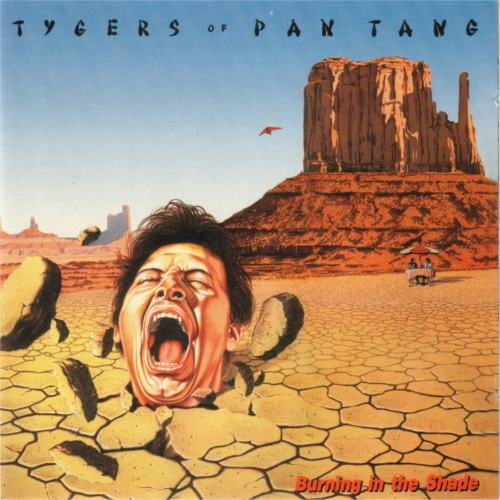
Different versions of the band appeared during the following years, with albums including ‘The Wreck-Age‘ and ‘Burning In The Shade‘ extending the Tygers story through the 1980s.
But the classic dream had faded.
For many bands, that would have been the final chapter.
Not for Robb Weir.
Years later, the guitarist who had been there at the beginning brought the name back to life.
This was not simply about becoming another nostalgia act performing the same songs forever.
The Tygers began making new music again.
And gradually, a new era of the band took shape.

A New Voice For The Wild Cat
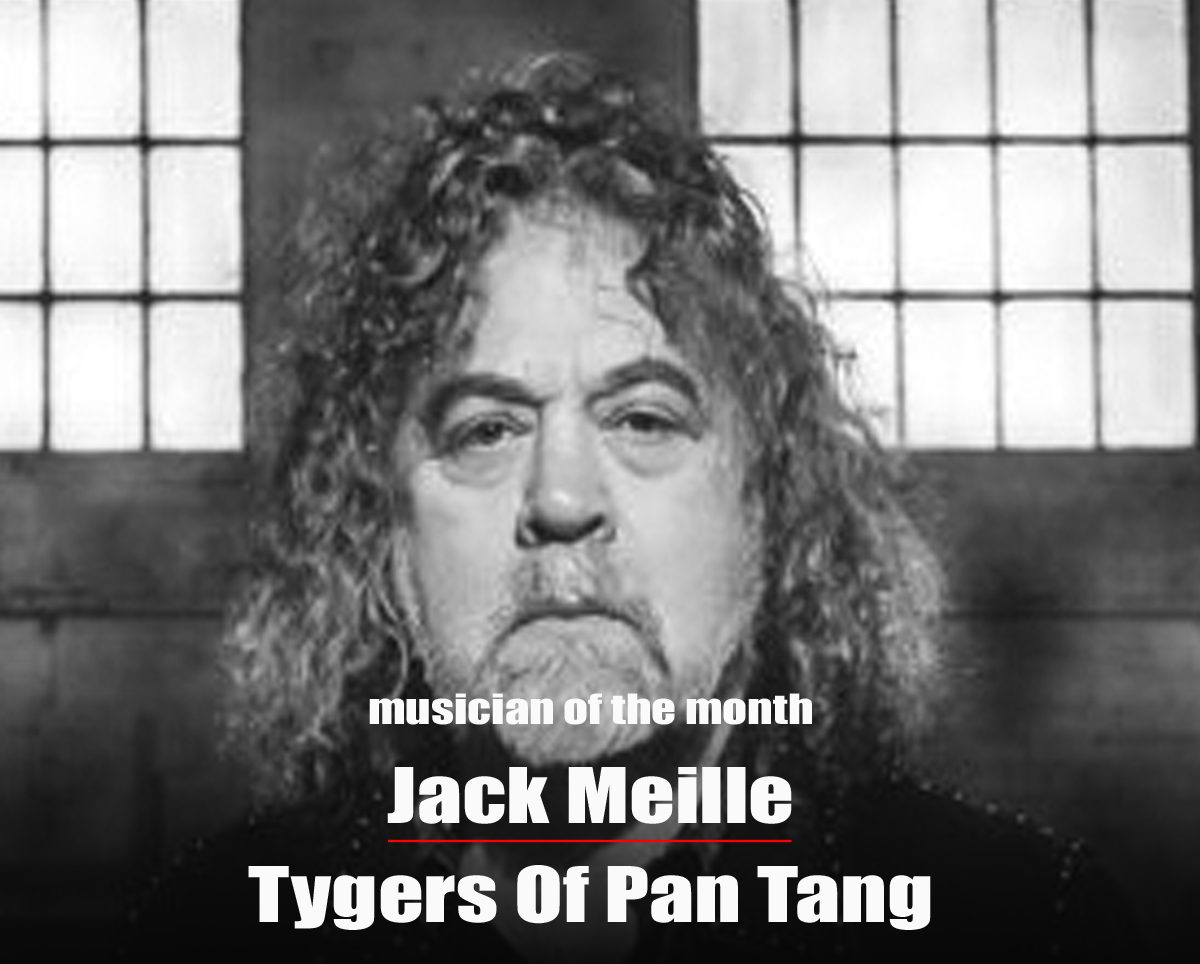
One of the most important figures of the modern Tygers story arrived with Italian vocalist Jacopo ‘Jack‘ Meille.
Replacing a classic singer in a band with decades of history is never easy.
Fans remember the voices attached to the records they grew up with.
But Meille did something essential.
He respected the past without trying to become a copy of it.
Perhaps that came naturally because, underneath it all, Meille had never really stopped being a Tygers fan himself.

photo courtesy of Steve Christie
His powerful voice gave the classic songs the strength they needed while allowing the band to continue creating new material with its own identity.
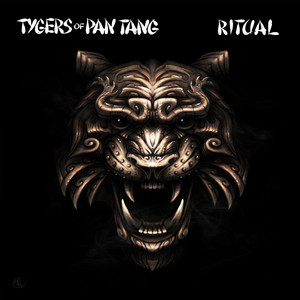
Albums including ‘Animal Instinct‘, ‘Ambush‘, the self titled ‘Tygers Of Pan Tang‘, ‘Ritual‘ and ‘Bloodlines‘ demonstrated that the band still had something to say.
The Tygers were no longer trying to recreate 1981.
They were carrying its spirit forward.
“Some bands become legends because they conquer the world. Others become legends because they refuse to disappear.”
More Than NWOBHM Nostalgia
That may ultimately be one of the most important aspects of the Tygers Of Pan Tang story.
The letters NWOBHM will always follow their name.
And they should.
The band earned its place in that history.
But reducing Tygers Of Pan Tang to a nostalgic footnote would miss the point.
Their early albums helped shape British Heavy Metal at the exact moment when the genre was finding a new identity.
‘Wild Cat‘ captured its raw hunger.
‘Spellbound‘ showed how powerful and sophisticated it could become.
‘Crazy Nights‘ documented a band racing forward almost faster than it could control.
And ‘The Cage‘ showed the possibilities, and dangers, of reaching for a wider audience.
The fact that Tygers Of Pan Tang never became as enormous as some of their contemporaries does not diminish what they achieved.
If anything, it makes their story more fascinating.
Because Rock history is not only written by the bands that eventually filled stadiums.
It is also written by those who were there when everything was still uncertain.
The bands that opened doors.
The bands that took risks.
The bands whose records ended up in the collections of young musicians who would create the next generation.
Tygers Of Pan Tang were one of those bands.
The Wild Cat Still Has Claws
Perhaps the history of Tygers Of Pan Tang can best be understood as a story of survival.
They came from a small seaside town in North East England and became part of one of the most important movements Heavy Metal has ever produced.
They survived the loss of their first singer.
They survived the loss of John Sykes.
They survived management and record company problems.
They survived breakups.
They survived changing musical fashions.
And decades after many bands from that original explosion disappeared completely, Tygers Of Pan Tang are still here.
Maybe they should have become one of the biggest Metal bands in the world.
Maybe, with different decisions and different circumstances, the Tygers could have followed Iron Maiden and Def Leppard into another dimension entirely.
But perhaps their legacy should not be measured by the stadiums they did not fill.
It should be measured by the music they left behind, by the musicians they influenced, by the fans who never forgot them, and by the fact that the name Tygers Of Pan Tang still means something more than four decades after ‘Wild Cat‘ was first unleashed.
Some bands become legends because they conquer the world.
Others become legends because, no matter what the world throws at them, they refuse to disappear.
Tygers Of Pan Tang belong to both history and the present.
The New Wave Of British Heavy Metal may have ended a long time ago.
But the Wild Cat is still alive.
And it still has claws.
The Voice That Became Part Of The Legend
Interview with Jack Meille of British Heavy Metal Legends
TYGERS OF PAN TANG
by Fok ‘bs’
“We knew from the start it was going to be heavier. None of us live on nostalgia.”
“As long as Robb keeps sharing riffs with us, Tygers will keep writing, recording, and enjoying every moment together.”
“Heavy metal constantly evolves without ever losing its DNA.”
“Joining Tygers was the closing of a circle that began for me back in 1982.”
“I never wanted to copy the past. I wanted to stay loyal to the soul of the songs while making them my own.”
“I was the only audition I ever did in my life, and I knew after singing ‘Take It’ that there was a connection.”
“The classics never became museum pieces for me. They became part of my own story.”
“Experience only matters if it keeps you curious.”
“The audience may expect a familiar voice, but every new album deserves a different emotional truth.”
“Singing is always a balance between mind and heart, between technique and feeling.”
“The anger I carried while recording Electrifyed became something I had never captured on a record before.”
“I wanted my father to be proud of me, and I believe that gave these songs a different voice.”

“We have never ridden on past glory. Tygers of Pan Tang live in the present, and our music has always belonged there.”
Few voices have become as inseparable from a legendary heavy metal band as Jack Meille has with Tygers of Pan Tang.
Joining the British NWOBHM institution in 2004 was never about replacing history, it was about becoming part of it.
More than twenty years later, Jack has helped shape a new era of the band, one that respects its roots while refusing to live in the past.
In this interview by Fok ‘bs‘, Jack Meille reflects on the creation of ‘Electrifyed‘, the emotional weight behind his performances, the challenge of carrying one of Britain’s great heavy metal legacies, and why the future of Tygers of Pan Tang will always matter more than nostalgia.
‘Electrifyed‘ arrives after so many years of Tygers history, yet the band clearly doesn’t sound interested in simply preserving the past.
When you were writing and recording this album, what did you consciously want to leave behind from previous Tygers records, and what did you absolutely want to keep?
“Funny enough we all agreed we needed to go back to the raw energy of ‘Wildcat’ without losing the melodic touch our latest albums have. We wanted the guitar riffs to drive the songs and set the vibe of the album.”
The title ‘Electrifyed‘ sounds almost like a mission statement:
energy rather than nostalgia.
Was there a particular moment during the writing or recording when you realised that the album had developed an identity of its own rather than simply becoming ‘another Tygers album‘?
“We knew from the start it was going to be heavier. None of us live on nostalgia: music is part of our everyday life. Robb constantly writes and records riffs he then share with us and we were lucky enough to be able to choose the ones that best suited the vibe of the album.”
After more than two decades with the band, do you still approach a new Tygers song with the same curiosity you had when you were trying to find your place in the band, or has experience actually made the creative process more dangerous because you know exactly what the audience expects from you?
“Tygers are the only band where I share melodies and lyrics duties. Both Craig, the drummer, and myself have developed through the years a great writing partnership that helps keeping inspiration fresh. We either work together on a song or separately and do demos so that we can share thoughts about the songs. This working method keeps us excited and very open minded.”
A vocalist in a long-running band has to deal with an unusual paradox:
the audience wants the voice they know, but the musician naturally wants to keep changing.
How much of Jack Meille on ‘Electrifyed‘ is the voice people have come to expect, and how much is a side of you that longtime Tygers listeners may not have heard before?
“I am also a vocal coach and keep telling my students that singing is a quest in achieving a balance between ‘mind’ and ‘heart’, vocal techniques and feeling. For this album I had to work hard on connecting with the vibe of each songs. On top of that I had to record the album while my father was diagnosed with cancer – he passed away last year in October – and all my anger and frustrations went into the recordings. I guess this has added something different to my vocals approach, a bitterness and anger I was never able to capture on a record. I wanted my father to be proud of me and I hope this inspired me all the way through the recording process.”
You joined Tygers of Pan Tang in 2004, at a point when the band already carried decades of history behind it.
When you first stepped onto that stage, did you feel more like someone entering an existing story, or did you immediately feel that you had to write your own chapter in it?
“I only did an audition in my entire life and that was for Tygers. I accepted the challenge and felt the responsibility. The first song I sang was ‘Take It’ and I could tell immediately that there was a ‘connection’. I was a fan but also I really liked Jon Deverill’s voice as I always thought it was unique and extremely underrated. I immediately felt comfortable wearing ‘his shoes’. The band has been very supportive ever since then and wanted me to make the old songs ‘mine’ from day 1.”
More than twenty years later, there must be songs in the Tygers catalogue that have existed in your life longer than some of the people you originally performed them with.
Has your relationship with the older material changed over the years, and are there songs you understand differently today than you did when you first started singing them?
“I was a Tygers fan back in the ’80s. I had been listening to ‘Spellbound’ and ‘The Cage’ a lot. I always enjoy singing the classics such as ‘Hellbound’, ‘Gangland’, my favorite, ‘Take It’, ‘Suzie Smiled’ and I am so happy that I suggested adding ‘Love Don’t Stay’ from ‘Crazy Nights’ in the setlist and since then we have always played it! I have to be honest: there is not a single songs in today’s setlist I do not enjoy singing or find hard to connect with.”
Being the voice of a legendary NWOBHM band inevitably means carrying expectations that were created before you were even part of the band.
How did you learn to distinguish between respecting the Tygers’ identity and protecting your own identity as a vocalist?
“Robb has always said to me to feel free to do whatever I want. What I have done through the years is trying to be loyal to the essence, the core of the songs and allow myself some freedom in the interpretation and the ‘delivery’. I was able through the years to re-record most of the classic Tygers songs and that helped me a lot to gain confidence in singing them my own way.”
You came into one of Britain’s most recognisable heavy metal institutions from Italy.
Has being an outsider to the original British NWOBHM scene actually helped you look at the Tygers’ legacy differently from someone who had lived through that scene from the beginning?
“I wish I was able to be part of NWOBHM… if only I had been older in 1980 and I was born in the UK. I grew up listening to Diamond Head, Iron Maiden, Angel Witch, Demon, Saxon, Def Leppard along with Judas Priest, Queen, Kiss, UFO, Led Zeppelin, Black Sabbath and Deep Purple to name just a few of the bands that shaped me as a singer and musician. When Iron Maiden and Saxon became famous in Italy I discovered that I was not the only one who was loving Heavy Metal and I felt part of a community. Joining Tygers was the closing of the circle which started in 1982.”
There is a strange moment in a band’s history when a musician who once joined an established legacy becomes part of that legacy himself.
When did you personally realise that you were no longer simply ‘the singer who joined the Tygers‘, but one of the people responsible for what the Tygers are today?
“I knew from the start I could contribute in shaping the sound of Tygers. I always thought the band should have tried to fill the musical gap between ‘Crazy Nights’ and ‘The Cage’. Tygers are an heavy riff based band with a distinctive melodic touch. I think we have achieved this as a band and I am proud to have contributed achieving this goal.”
The Tygers have survived changes in musical fashion, record-industry structures and generations of listeners.
What do you think is the one thing about heavy metal that has changed enormously since you joined the band, and the one thing that has barely changed at all?
“Heavy Metal has the power to survive through years and fashion. It has evolved too in order to match the new generations’ taste yet keeping clear its roots. It’s a genre that constantly changes without losing its DNA.”
After twenty-plus years, what is harder:
surprising the audience, surprising your bandmates, or surprising yourself?
And can you remember a recent moment when something the Tygers created genuinely caught you off guard?
“You need to keep yourself excited.The music we write together is still exciting for me and still motivates me. As long as Robb is willing to share his riffs with us the band will still be playing and enjoying every moment we play together on stage or in the studio.”
The Tygers’ history is now long enough that younger musicians discovering the band may actually experience your era of the group as part of their own entry point into the band’s music.
Does that change the way you think about the responsibility of being on the other side of that musical bridge?
“I can only be honored if ‘Only The Brave’ or ‘White Lines’ are the songs that allow a new audience to get to know Tygers Of Pan Tang. We are the Tygers of Pan Tang and we keep the legacy alive.”
If someone discovered Tygers of Pan Tang through ‘Electrifyed‘ and then decided to explore everything the band has done since the NWOBHM years, what would you hope they understand about the Tygers after following that journey, and what would you hope they understand about Jack Meille after hearing your part in it?
“I would hope they will appreciate the dedication I have been sharing along with all the members, past and present, of this incredible band that has never rode on past glory. We live in the present and our music has always been inspired by that.”
After more than twenty years as the voice of Tygers Of Pan Tang, Jack Meille no longer speaks as someone who joined a famous band, but as someone who has helped shape what that band has become.
His respect for the classic material remains clear, yet so does his determination to keep the music moving forward.
‘Electrifyed‘ captures that balance.
It reaches back to the raw energy of the band’s earliest days while sounding firmly rooted in the present, driven by the same enthusiasm that has kept the Tygers alive through changing eras and changing audiences.
For Jack, the legacy is not something to preserve behind glass.
It is something to keep playing, keep writing, and keep passing on to the next generation of heavy metal fans.
by Fok ‘bs‘
The Tyger Still Has Its Claws
British NWOBHM Legend
TYGERS OF PAN TANG
set to release album
‘Electrifyed‘
review by Georgina
track-list:
Rise Up!
Forevermore
The Powers That Be
Dark Divinity
Electrifyed
Unfold My Soul
A Shadow on Fire
The Nail
The Fight Goes On
Dark Skies
Revenge is Sweet

Tygers Of Pan Tang are:
Robb Weir – guitar
Craig Ellis – drums
Jack Meille – vocals
Huw Holding – bass
John Foottit – guitar
in concert 2026:
Aug23rd The Waterloo Music Bar Blackpool/UK
Nov20th Holy Diver Stockport/UK
Nov26th Birdwell Venue Birdwell/UK
Nov26th Birdwell Karate Club Birdwell/UK
Nov27th The Live Rooms Chester/UK
Dec4th 229 London London/UK
discography:
EP
album

EP
album
album
album

album
album

album

album

EP

album

EP
EP

album

EP

EP

album
album

EP

album
There are bands that spend the later stages of their careers carefully protecting their legacy, and then there are those that continue adding new chapters to it.
This band has always belonged firmly in the second category.
More than four decades after helping ignite the New Wave Of British Heavy Metal, the founding guitarist and his current lineup have no interest in simply reminding listeners of what they achieved in the past.
‘Electrifyed‘ sounds like a band that remains hungry, focused, and determined to prove that its story is far from over.
From the opening moments of ‘Rise Up!‘, that attitude is immediately apparent.
The guitars arrive with muscular, unmistakably British heavy metal riffing that may recall the genre’s golden era, but the performance never feels like an exercise in nostalgia.
Rather than attempting to recreate the sound of the early records, the band takes the DNA of those formative years and filters it through more than forty years of experience.
The lead vocalist delivers the material with grit and authority, while the dual guitar attack gives the songs an impressive amount of firepower.
That momentum continues with ‘Forevermore‘, a more expansive composition that reveals a broader melodic dimension early in the album.
Its arrangement rewards repeated listens, allowing the band to demonstrate that the weight of its history is no longer something it needs to rely on.
The songs stand confidently on their own.
‘The Powers That Be‘ follows with another forceful drum performance, combining familiar melodic instincts with a harder production and a powerful guitar sound.
One of the album’s greatest strengths is precisely the fact that nobody seems interested in pretending to be younger than they are.
The musicians are not trying to sound young.
They are simply trying to sound great, and that proves to be a far more convincing approach.
With ‘Dark Divinity‘, the album moves into heavier territory.
The interplay between rhythm and lead guitars adds another dimension without compromising the band’s established identity.
There is always a danger for veteran acts of either becoming overly attached to their classic sound or changing direction simply to appear contemporary.
‘Electrifyed‘ avoids both extremes.
The band sounds heavier and more experienced, but remains unmistakably itself.
Then comes ‘Electrifyed‘, the title track and one of the album’s central moments.
I particularly enjoy its intro, and it is one of my favorite songs on the record.
If there is a mission statement for this new chapter, this is surely it.
The guitars are loud, the songwriting is immediate, and the attitude is impossible to miss.
Yet there is no attempt to recreate 1981.
The founding guitarist does not need to reproduce the past, while the second guitarist has no reason to imitate anyone who came before him.
Instead, the two guitarists sound like they are building upon the foundation already established.
That is exactly what a legacy band should be doing.
‘A Shadow On Fire‘ reveals a darker side of the record, introducing a brooding atmosphere that gives the album valuable variation.
It is also one of the reasons ‘Electrifyed‘ works so well as a complete album rather than simply a sequence of individual tracks.
The band understands when to push forward with full force and when to allow atmosphere to carry the song.
‘The Nail‘ keeps the energy high and offers another reminder that a powerful heavy metal riff does not require excessive technicality or layers of studio trickery.
I love this song.
There is something wonderfully traditional about its construction, with the guitars given enough room to make an impact, while the bass and drums provide a solid foundation and the vocal melody supplies an instantly memorable hook.
This is traditional heavy metal played by seasoned musicians who understand that simplicity can often be far more effective than technical excess.
Well done.
Then comes ‘The Fight Goes On‘, a title that could hardly be more appropriate for a band still operating at this stage of its career.
The group has survived lineup changes, shifting musical fashions, and decades in which heavy metal was repeatedly declared dead or irrelevant.
Yet here they are, still writing songs, still recording albums, and still plugging in their guitars.
Musically, the track delivers everything one could want, big riffs, a driving rhythm section, and a chorus that seems made to be shouted back by a crowd.
What makes it particularly convincing, however, is the genuine conviction behind the performance.
These musicians do not sound as though they are pretending to be hungry.
They sound genuinely hungry.
The mood becomes darker again with ‘Dark Skies‘, which reveals another layer of depth within the album.
The band is not simply interested in stacking riffs one after another.
There is atmosphere here, and the arrangement gives the song room to breathe.
Gritty lead vocals add further character, while the guitars create a darker backdrop without sacrificing the melodic qualities that have always been central to the band’s identity.
‘Revenge Is Sweet‘ brings a swagger that makes it immediately appealing.
It is another one of my favorite tracks on the album.
Heavy without becoming ponderous and melodic without ever becoming soft, the song carries exactly the kind of attitude that distinguishes classic British heavy metal from countless interchangeable modern productions.
You can almost picture it being played at full volume in a packed club, fists in the air, battle jackets everywhere, beers in hand, and heads moving from the opening riff.
And history certainly matters here.
The founding guitarist was there when the New Wave Of British Heavy Metal was taking shape, and the band went on to create records that became essential listening for generations of metal fans.
Their early work helped establish a template that countless bands would later follow.
Yet ‘Electrifyed‘ is not a history lesson.
It is a new album, firmly rooted in the present, and that distinction is crucial.
There are plenty of veteran bands capable of touring indefinitely while relying almost entirely on the songs everyone already knows.
There is absolutely nothing wrong with that.
But when a band this far into its career releases an album that genuinely sounds hungry, vital, and eager to return to the stage, it deserves attention.
‘Electrifyed‘ does not sound like a farewell.
It sounds like another chapter.
The riffs still bite, the melodies still matter, and the guitars retain that unmistakable British heavy metal character.
The vocalist sounds fully committed, the founding guitarist remains the beating heart of the operation, and the second guitar adds another spark to an already electrified lineup.
Most importantly, the band has not turned into a tribute act to its own past.
Instead, it has become something far more interesting, a legendary act that still sounds like a working, thriving heavy metal band.
More than four decades on, the tiger is not retreating.
It still has its claws out.
I enjoyed ‘Electrifyed‘ immensely, and chances are you will too.
by Georgina
IMAGE CREDITS & PERMISSIONS
Tygers Of Pan Tang, title image
Source: Official Tygers Of Pan Tang website
Used with permission of Tygers Of Pan Tang
Modification: Text added
Tygers Of Pan Tang, official MCA Records promotional photograph
Source: Official Tygers Of Pan Tang archive
Used with permission of Tygers Of Pan Tang
Modification: Text added
John Sykes, detail from official MCA Records promotional photograph
Source: Official Tygers Of Pan Tang archive
Used with permission of Tygers Of Pan Tang
Modification: Cropped from original photograph
Wild Cat, Spellbound, Crazy Nights and The Cage, album cover artwork
© MCA Records / respective rights holders
Used for editorial identification and commentary
Robb Weir, Headbangers Open Air 2014
Photo: Frank Schwichtenberg
Source: Wikimedia Commons
License: Creative Commons Attribution ShareAlike 3.0 Unported, CC BY-SA 3.0
CC BY-SA 3.0 license: https://creativecommons.org/licenses/by-sa/3.0/
Modification: None
Jack Meille
Photo courtesy of Steve Christie
Source: Official Tygers Of Pan Tang website
Used with permission of Tygers Of Pan Tang