Love, Darkness And Redemption
Interview with Italian Female-Fronted
Melodic Power Metallers
RISEN CROW
By Fok ‘bs’

“We strive to stay true to our evolution as a band.”

“Our music is primarily catharsis. We prefer listeners to find their own truth.”
“We are not pure symphonic metal. We are power metal with dark atmospheres that breathe with the story.”
“The vocals are not there to show off technique. They exist to guide the listener through the story.”
“Darkness allows us to explore the fragility, guilt and redemption that heroism alone cannot express.”
“We do not glorify the darkness. We use it as a mirror of human complexity.”
“The gothic atmosphere is deliberate pressure on the listener, making the music visceral and inescapable.”
“Music captures the universal trap of destructive fascination, offering catharsis without the real cost.”
“We wanted to rebel against the idea of nothing but roses and swords by giving power metal a tormented soul.”
“Obsession can become a curse, transforming desire into madness, murder and redemption beyond death.”
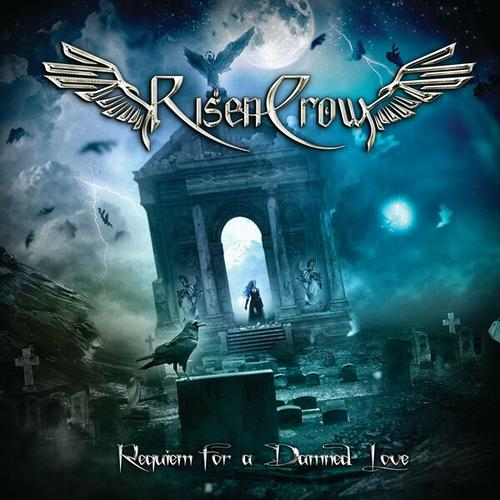
“Rather than leaving listeners with discomfort alone, we hope they find the strength to face their own damned loves.”
In this interview by Fok ‘bs’, Risen Crow open the doors to the dark and cinematic world of their debut concept album, ‘Requiem For a Damned Love‘.
Blending melodic power metal with gothic atmospheres and symphonic depth, the Italian band explores obsession, loss, redemption and the fragile line between love and destruction.
Together, they discuss their songwriting philosophy, the importance of storytelling, the emotional power of restraint and why darkness often reveals truths that light cannot.
Your music balances melodic power metal with gothic darkness and symphonic weight.
When you start writing, do you think first in terms of emotion, atmosphere, or story?
“In Risen Crow’s songwriting, we always start from a visceral emotion – that fire or inner void that Claudio captures in the first vocal lines, like the tormented obsessions in ‘Requiem For a Damned Love’. Giuseppe develops the power melody, then we add the gothic and symphonic atmosphere to build dark tension, and finally the story emerges as a concept chapter. It’s a collaborative process, born from remote lockdown work, balancing power metal heroism with deep melancholy: we don’t prioritize just one, but emotion is the spark that ignites everything.”
In Risen Crow, the vocals feel less like a lead instrument and more like a narrator guiding the listener.
How consciously do you approach the voice as a storytelling tool?
“The vocals in Risen Crow are deliberately approached as narrators guiding the listener through the story – not lead instruments for showing off technique, but voices dialoguing like the concept’s characters. Claudio and I (Antonella) naturally choose parts based on emotional tone: my melancholic intensity for Rose, his power for Jac’ – except in ‘Funeral Jack’, where the priest delivers the funeral mass and Jack is guided by the crow. It’s a conscious choice, drawn from our past experiences, to make each track an immersive chapter in ‘Requiem For a Damned Love’ rather than a solo spotlight.”
‘Requiem For a Damned Love‘ dives deep into obsession, loss, and destructive desire.
What drew you to explore love in its most dangerous and unhealthy forms?
“What drew us to explore love in its most dangerous and unhealthy forms is that ‘Requiem For a Damned Love’ is a concept about passion turning into a curse: from obsessive desire to madness, murder, and redemption beyond death. In ‘Black Widow’, for instance, the fatal seduction reflects that fragile line between love and annihilation, with our dual vocals embodying victim and predator. We don’t glorify the darkness, but use it as a mirror of human complexity, a ‘requiem’ for what consumes.”
Songs like ‘Black Widow‘ unfold almost like short horror films.
Where do these narratives usually come from: literature, personal experiences, or pure imagination?
“Narratives like ‘Black Widow’ mainly come from pure imagination, but filtered through personal emotions and a love for gothic horror cinema – a man seduced by a supernatural ‘black widow’ whose fatal allure survives even obvious danger. They don’t stem from specific literature or direct experiences, but from that human obsession we explore in the ‘Requiem For a Damned Love’ concept, with the crow as a guide to the afterlife. It’s our way of turning universal fears into visceral metal stories.”
Your sound feels cinematic without turning into pure symphonic metal.
How do you decide when orchestration should lead and when it should stay in the shadows?
“We decide orchestration on a case-by-case basis, always in service of the story and emotion: it leads for cinematic tension, like the hypnotic strings in ‘Black Widow’ or the melancholic finale of ‘Black Rose’, but stays in the shadows to give space to powerful power metal riffs and dual vocals. Alessandro brings that symphonic touch that elevates without overpowering – we’re not pure symphonic metal, but power with dark atmospheres that ‘breathe’ with the ‘Requiem For a Damned Love’ narrative.”
Many bands in melodic power metal aim for heroism and triumph, while your music often leans toward tragedy.
What does darkness allow you to express that light cannot?
“Darkness allows us to explore human complexity that pure power metal heroism often overlooks: in ‘Requiem For a Damned Love’, tragedy and obsession reveal fragility, guilt, and authentic redemption – like Jack’s forgiveness from beyond death. Light celebrates triumphs, but gothic darkness digs into visceral pain, making catharsis real and profound. It’s our rebellion against ‘all roses and swords’: power metal with a tormented soul, for fans seeking truth beyond glory.”
The gothic elements in your music add tension rather than beauty alone.
Do you see atmosphere as a form of pressure on the listener, rather than decoration?
“Yes, the gothic atmosphere is deliberate pressure on the listener. It builds tension between explosive power riffs and oppressive symphonics, thrusting the listener into the characters’ emotional chaos. It’s our tool to make metal not just epic, but visceral and inescapable.”
Coming from Rome, a city layered with history, art, and decay, do you feel that your environment subtly shapes the dramatic tone of your music?
“Our Roman environment, layered with history, art, and decay, subtly shapes the dramatic tone – not explicitly, but like an echo in ruins that inspires the reborn crow of ‘Requiem For a Damned Love’. That tension between ancient splendor and modern ruin mirrors our tragic narratives of obsessive love.”
‘Black Widow‘ portrays fascination that survives even when danger becomes obvious.
Why do you think humans are so often drawn to what ultimately destroys them?
“It’s human nature: we dive headfirst into destruction because toxic danger awakens primal survival instinct, the illusion of fulfillment in saving the other, or simply because we’ve fallen for the wrong person – like the fatal fascination in ‘Black Widow’. Surviving chaos makes us feel alive in ways safety never can. Music captures this universal trap, offering catharsis without real cost.”
Power metal is often associated with speed and technicality.
How important is restraint and space in keeping your songs emotionally effective?
“Restraint and space are crucial for emotional impact: in a genre of speed and technique, we let songs ‘breathe’ with tense silences or slow builds, like ‘Black Rose’s finale or ‘Black Widow’s breakdowns, to make riffs and dual vocals explode.”
There’s a strong sense of identity in Risen Crow that avoids genre clich’s.
How intentional is that, and what are you most careful not to become as a band?
“Our strong identity stems from our listening background – pure power (Helloween, Kamelot), symphonic (Nightwish, Epica), and dark – but it’s intentional only to a point: blending our diverse voices and ideas (each bringing something unique) naturally forged a cliché-free sound, emerging organically in Requiem. We strive to stay true to our evolution as a band.”
Your songs invite listeners into dark emotional spaces.
Do you see your music more as a mirror, a warning, or a form of catharsis?
“Our music is primarily catharsis: it invites into the dark emotional spaces of ‘Requiem For a Damned Love’ to process obsession and loss, emerging transformed, like the final forgiveness. It’s also a mirror of human fragilities, but not a moralistic warning: we prefer listeners find their own truth.”
When someone finishes listening to ‘Requiem For a Damned Love‘, what feeling would you rather leave them with: empowerment, discomfort, or reflection?
“Reflection and empowerment, but with a trace of hope: ‘Requiem For a Damned Love’ immerses in tragic chaos, yet the ending (forgiveness, crow’s rebirth) reminds us human nature there is desire to self-discover, find balance, and become better people. We don’t leave mere discomfort, but strength to face one’s own ‘damned loves’.”
With ‘Requiem For a Damned Love‘, Risen Crow demonstrate that melodic power metal can be both epic and emotionally profound.
Their fusion of soaring melodies, gothic tension and cinematic storytelling creates an experience that reaches far beyond traditional genre boundaries.
Rather than celebrating heroes, the band invites listeners to confront obsession, loss and redemption, proving that darkness can illuminate the deepest parts of the human soul.
It is this emotional honesty and fearless creativity that make Risen Crow one of Italy’s most compelling emerging melodic metal acts.
by Fok ‘bs‘
RISEN CROW
Female-Fronted Melodic Power Metal
From Italy

Risen Crow are:
Flavio Cicchetti – bass
Filippo Martini – drums
Giuseppe Longo – guitars
Francesco Menale – guitars
Alessandro Bernabei – keyboards
Antonella Della Monica – vocals
Claudio Vattone – vocals
discography:
album
Italian female-fronted melodic power metal outfit Risen Crow hail from Rome and have been steadily building their reputation with a sound that blends classic power metal drive, gothic darkness, and symphonic grandeur.
Rooted in melody but unafraid of weight and atmosphere, the band draws from both traditional European metal and more cinematic influences, crafting songs that lean as much on storytelling as on sheer musical impact.
Since their formation, Risen Crow have focused on creating a distinct identity where powerful vocals sit at the center, supported by sharp guitar work, dense orchestration, and a rhythm section that pushes their songs forward with urgency.
Their music often explores themes of love, loss, obsession, and inner darkness, giving their material a dramatic, almost theatrical edge that sets them apart within the Italian metal scene.
This approach finds its full expression on the album ‘Requiem For a Damned Love‘, a record that dives deep into emotional extremes and dark narratives.
One of its standout tracks is ‘Black Widow‘, a high-energy song that encapsulates the band’s aesthetic perfectly.
Musically, the track blends aggressive guitar riffs and a driving, pressing rhythm section with symphonic layers and synthesizers, creating a tense and dramatic atmosphere that bridges melodic power metal with gothic and symphonic elements.
Lyrically, ‘Black Widow‘ unfolds as a dark, supernatural tale.
A man, drawn by an irresistible and otherworldly call, travels to a remote place to meet a mysterious woman.
What begins as fascination quickly turns into horror as her true nature is revealed – not a lover, but a predator.
Siren-like in appearance yet ruthless in soul, she seeks not affection but his very essence.
Even when confronted with the terror of her red eyes and hollow gaze, the man cannot escape her hypnotic pull.
The story ends in a fatal act that seals his destiny among the lost, while she remains unchanged – an eternal hunter.
With Risen Crow, metal is not just about riffs and speed, but about atmosphere, emotion, and narrative.
‘Black Widow‘ stands as a strong introduction to a band that combines melodic power, gothic darkness, and vivid storytelling into a compelling and unmistakable sound.