Where Darkness Leaves Its Scars
Interview with German Black Metal Outfit
HKSPK
by Fok ‘bs’
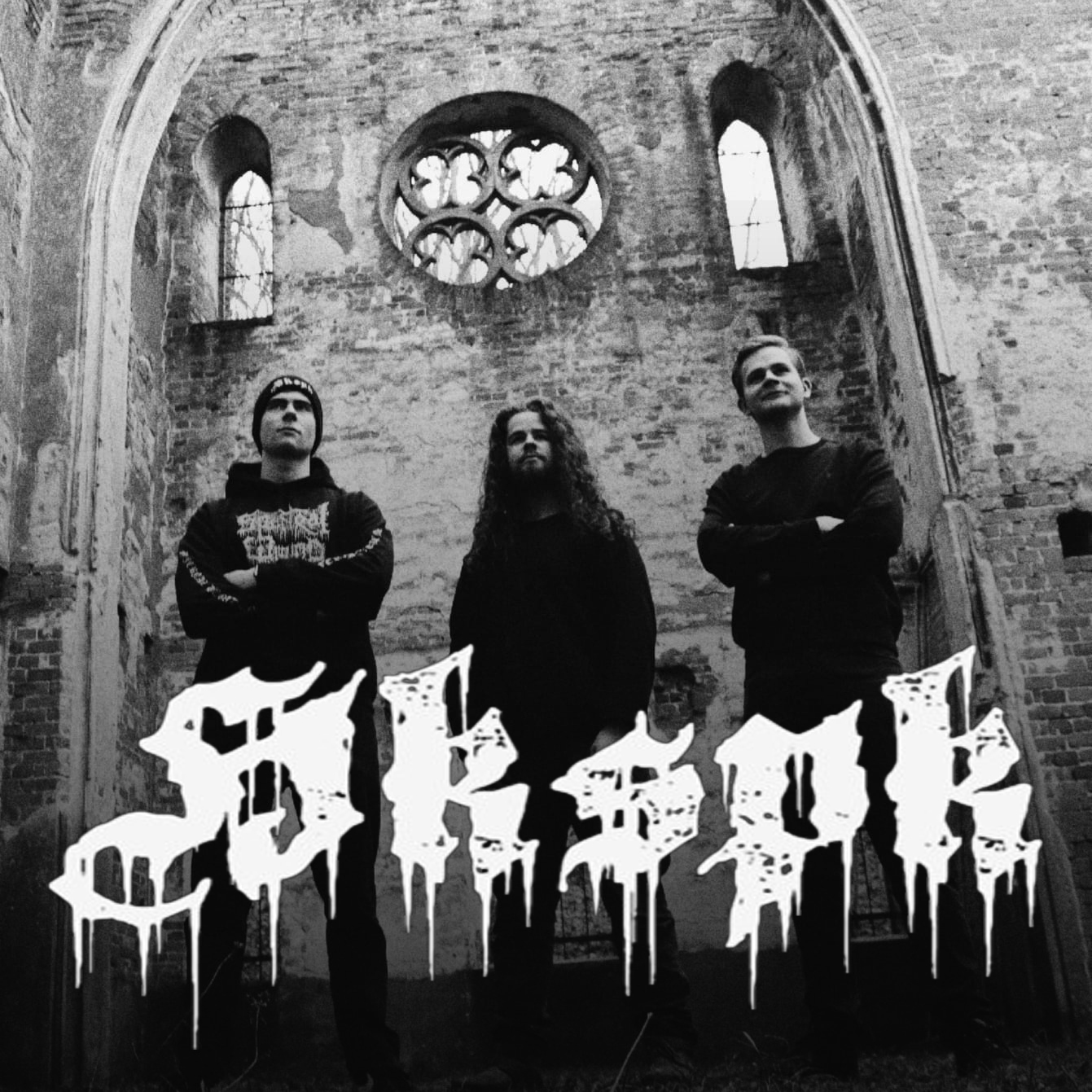
“The only thing that matters is that the three of us can say, ‘That sounds like HKSPK.’”

“If a lyric is based on a true event, the real core of it has to remain intact for us.”
“The figure on the cover has returned, but is still wearing the bandages. You’ve arrived somewhere, but you haven’t necessarily found redemption.”
“We let every song do whatever it wants.”
“If two chords work, we don’t necessarily need seven.”
“Humour is simply part of who we are, so somehow it also has to be part of HKSPK.”
“Maybe their version is ultimately better than ours. Who knows.”
“A title can hit you first, and the song can explain afterwards why it did.”
“At the beginning, you do wonder whether you’re ‘Black Metal enough’, ‘Death Metal enough’, or enough of whatever else. By now, we care considerably less about that.”
“Just because you can add something doesn’t mean you should.”
“When everything is one hundred percent perfect, it can become surprisingly boring.”
“Sometimes you don’t need a monster at all. If you think about something long enough and invent enough things around it, you simply build the monster yourself.”
“Music actually does create a certain distance. You take something that happened and build a song out of it.”
“Once an album has been released, that interpretation no longer belongs only to us.”
“Why should our interpretation automatically be more valuable?”
“Coming home does not automatically mean that everything goes back to the way it was before.”
“You’ve arrived somewhere, but you haven’t necessarily found redemption.”

“If someone understands ‘Heimkehr’ completely differently from us and still finds something in it that makes them think or moves them emotionally, then the album has done exactly what music should do.”

“After ‘Heimkehr’, it’s over. That’s exactly where the silence belongs.”
With ‘Heimkehr’, German Black Metal outfit HKSPK have created an album that refuses to remain within clearly defined boundaries.
Death Metal, Doom, Hardcore, Punk and increasingly atmospheric darkness all find their place, yet the music never sounds as though stylistic diversity has become an objective of its own.
Instead, the songs are allowed to develop according to their individual character, held together by a distinctly HKSPK identity.
In this interview by Fok ‘bs‘, Jim, vocals and lead guitar, talks about the meaning behind ‘Heimkehr’, the real experiences that found their way into its lyrics, the importance of imperfection, the freedom of interpretation, and why returning home does not necessarily mean returning unchanged.
He also discusses humour amid darkness, deliberately provocative song titles, historical inspiration, and why HKSPK have stopped worrying about exactly where they belong within the underground.
‘Heimkehr’ is based on the idea that returning home does not necessarily mean returning unchanged.
When did you realise that this idea could become the emotional centre of the album rather than simply the meaning behind one particular song?
“We only really became aware of that while working on the album. At first, ‘Heimkehr’ was simply a song title and, of course, the idea behind that particular track. The further the other songs developed, the more we realised that this theme could also be applied to the rest of the album. That is also why the cover artwork by Steffen Schmolke fits so well for us. You see a wounded figure who has returned home and is writing about his experiences on his own bandages. He is physically back, but the wounds are still there. That idea runs through many of the lyrics. Coming home does not automatically mean that everything goes back to the way it was before. At first, ‘Heimkehr’ almost sounds positive. But in connection with the artwork and the songs, the word takes on a rather dark meaning.”
The album moves between Black Metal, Death Metal, Doom, Punk, Hardcore and atmospheric passages without ever sounding as though you are trying to demonstrate how many styles you can squeeze into 25 minutes.
Do you deliberately allow each song to determine its own musical language, even if that means moving away from what people might expect from HKSPK?
“Basically, we let every song do whatever it wants. We don’t sit in rehearsal and say, ‘What this album really needs now is a Doom song’. Usually, it starts with a guitar riff, a melody or a rhythm. Everything else develops from there. If the initial idea is slow and dark, the song will probably move in that direction. If the first riff simply hits you in the face, it probably isn’t going to turn into a ten minute Atmospheric Black Metal epic. That means the songs can look quite different from one another on paper. Death Metal, Black Metal, Doom, Hardcore or Punk, we don’t really care where people draw the line in the end. The only thing that matters is that the three of us can say, ‘That sounds like HKSPK’. With ‘Heimkehr’ in particular, that is also why we deliberately chose the running order we did. The album begins with the more direct Death Metal songs and gradually becomes more atmospheric and darker towards the end. Apples and pears. Still a fruit salad when you put them together.”
‘Rot In Despair’ is particularly striking because you create so much weight with so little.
The verse is built around just two chords before the song gradually expands.
Was that reduction a conscious compositional decision, or did you discover during the writing process that the song became stronger the less you added?
“It wasn’t planned as some grand concept from the beginning. ‘Rot In Despair’ grew out of a relatively simple basic idea. While playing it, we realised that the repetition and those few chords created exactly the effect the song needed. Of course, with a riff like that you could start adding another five guitar tracks, three transitions and all kinds of technical tricks. But just because you can add something doesn’t mean you should. For us, it is precisely that simplicity that creates the heaviness of the song. The later parts automatically have more impact because you haven’t already used everything up beforehand. We try not to make songs unnecessarily complicated anyway. If two chords work, we don’t necessarily need seven. Saves us some work too, haha.”
A lot of Extreme Metal deals with darkness in an abstract or theatrical way, while several moments on ‘Heimkehr’ are based on real experiences involving yourselves or people around you.
Is there a point where turning something into a song feels too personal, where you might be revealing too much, or does transforming an experience into music actually create a certain distance from it?
“There are definitely things where we have to think about how far we want to go. If a lyric is based on a true event, the real core of it has to remain intact for us. Otherwise, we might as well write a completely fictional story. Names or individual details don’t necessarily matter. What matters is the feeling or the situation from which the lyrics originated. Music actually does create a certain distance. You take something that happened and build a song out of it. At some point, the experience itself is no longer the only thing at the centre. The composition, the lyrics and the overall picture become equally important. That allows you to process serious things without having to tell them exactly as they happened. With completely fictional stories, of course, it’s different. We can really let those off the leash. In the end, the story has to fit the song. Then it works for us.”
‘Torture’ deals with something surprisingly human rather than supernatural, the way fear, exaggeration and misinterpretation can transform something harmless into something threatening.
Do you think modern life has made people more susceptible to creating their own monsters from incomplete information?
“I do think that happens more quickly today. We’re constantly being bombarded with bits of information. A sentence, an image, a message or some headline. Your own mind fills in the rest. And when fear enters the equation, something completely trivial can suddenly become an enormous threat. That’s exactly the idea behind ‘Torture’ for us. The starting point isn’t actually anything supernatural or particularly spectacular. What makes it interesting is what the person themselves turns it into. Sometimes you don’t need a monster at all. If you think about something long enough and invent enough things around it, you simply build the monster yourself. That’s probably timeless. Today, you’re simply given a lot more material to work with.”
‘White Secretions II’ suddenly introduces crude humour, self irony and a chaotic night after a concert into an album that otherwise deals with war, despair and death.
Is humour a way for you to break through the darkness, or is it actually another way of expressing that same darkness?
“Humour is simply part of who we are, so somehow it also has to be part of HKSPK. Just because we play Black and Death Metal doesn’t mean we sit silently in a dark basement after every rehearsal thinking about death, haha. ‘White Secretions II’ is obviously an extreme contrast to some of the other songs on ‘Heimkehr’. On one hand, we’re dealing with war, despair, loss or death, and then suddenly this completely ridiculous story comes around the corner. But things like that happen in our lives too. So we didn’t want to make the song artificially serious just to make it fit some idea of what a dark Metal album is supposed to be. The incident was absurd, so the lyrics were allowed to be absurd as well. Perhaps that contrast even makes the more serious songs that follow feel a little stronger.”
‘Sonnenjäger’ introduces a mysterious figure that could represent fate, death or even hope.
Why was it important for you not to define this figure clearly, but instead leave its interpretation to the listener?
“Because giving it a definitive explanation would probably destroy the figure for us. The Sonnenjäger can be many things. Death, fate, hope or perhaps something completely different. Of course, we have our own idea of what it represents, but that doesn’t automatically have to be the correct interpretation for every listener. For us, lyrics like these work better when every line isn’t explained. If we said at the end, ‘The Sonnenjäger is exactly this and means exactly that’, a large part of its effect would disappear. Then it would simply become a story with an answer key. We like it when someone listens to a song and later comes up with an interpretation that never even occurred to us while writing it. Maybe their version is ultimately better than ours. Who knows.”
‘Kill The Weak’ has a deliberately provocative title, while the song itself deals with loss of control, fragmented memories, humiliation and anger.
Do you enjoy deliberately using titles or phrases that can easily be misunderstood before someone has even listened to what is actually behind them?
“Of course, there is a certain amount of fun in that. As a title, ‘Kill The Weak’ initially sounds pretty straightforward. Anyone who only reads those three words can probably come up with a complete idea of what the song must be about within ten seconds. And they might be completely wrong. The actual lyrics deal much more with loss of control, gaps in memory, humiliation and the anger that grows out of those things. The title captures that aggression without directly explaining the content. We like those kinds of contrasts. A title can hit you first, and the song can explain afterwards why it did. Of course, there is always the risk that someone will only see the title and won’t even want to hear the rest. But there’s not much we can do about that, haha.”
‘Rain In The Face’ takes inspiration from the historical figure without becoming a conventional biography.
When you use historical figures in your lyrics, what interests you more, the actual person or the possibility of using that person as a vessel for something that could never be expressed through a purely factual account?
“With historical figures, we’re not necessarily interested in retelling their entire life story as accurately as possible from birth to death. There are history books and documentaries that can do that far better. What interests us more is the story or emotion that can be connected to a person. With ‘Rain In The Face’, the historical figure was therefore more of a starting point. From there, you can develop a story that works musically and lyrically without turning it into a biography. That said, the same rule applies here. If we refer to real events or people, we don’t want to completely distort the essential truth behind them. A little artistic freedom is part of it. Otherwise, instead of writing a song, we might as well set a Wikipedia article to music.”
You recorded, mixed and mastered ‘Heimkehr’ yourselves at Room13, deliberately preserving audible imperfections in the production.
What imperfection on the album could you technically have removed, but consciously decided to keep because you felt the song would have become weaker without it?
“There are actually quite a few moments like that. Of course, we could have corrected much more during mixing. Small fluctuations, individual attacks or transitions can be straightened out pretty easily with today’s technology. But at some point, we felt that we were no longer improving the song, we were simply making the recording more perfect. And for us, those aren’t necessarily the same thing. Our guitars are still allowed to sound like guitars, and the drums don’t have to sound as though every single hit was positioned with a ruler. Technically, we’ve learned a great deal since ‘Holy Scum’ and ‘The Human Butcher’, and we were able to refine many things on ‘Heimkehr’. But we still wanted to preserve that organic character. When everything is one hundred percent perfect, it can become surprisingly boring.”
You have already shared the stage with bands such as Asagraum, Enisum and Waldgeflüster.
Has playing with bands from different corners of the German underground changed your own perception of where HKSPK actually belong within that scene?
“More than anything, we’ve realised that we don’t necessarily have to fit neatly into one particular place. Asagraum, Enisum and Waldgeflüster already sound very different from one another. Nevertheless, we were able to share stages with all of them and the shows worked. That naturally gives you confidence. At the beginning, you do wonder whether you’re ‘Black Metal enough’, ‘Death Metal enough’, or enough of whatever else. By now, we care considerably less about that. For us, a much more important realisation was that even the bigger bands are ultimately just people like everyone else. Of course, they’re more experienced and there’s an incredible amount you can learn from them technically. But as soon as you’re talking to each other backstage, you realise pretty quickly that they’re simply people making music too. That automatically makes you a little more relaxed.”
The album ends with the more than six minute long ‘Heimkehr’, yet although the title suggests an arrival, the music offers no real sense of safety or redemption.
When you finished the song, did you feel that the album had actually reached its destination, or more that you had arrived at the point where there was simply nothing left to say?
“It felt more like nothing else should come after that point. ‘Heimkehr’ isn’t a happy ending. At first, the title might sound like one. You’re back home, it’s all over, and now everything is going to be fine. But that’s exactly the feeling we didn’t want. The figure on the cover has returned, but is still wearing the bandages. That’s also how the final song feels to us. You’ve arrived somewhere, but you haven’t necessarily found redemption. That’s why the album had to end there. Putting another fast song after it would probably have felt as though someone suddenly threw open the door after the closing credits and said, ‘Oh, by the way, here’s another two and a half minutes of Death Metal’. No! After ‘Heimkehr’, it’s over. That’s exactly where the silence belongs.”
If someone listens to ‘Heimkehr’ from beginning to end and comes away with a completely different interpretation of the album from the one you had in mind while writing it, would you consider that a misunderstanding, or would it actually mean that the album had achieved something important?
“Clearly, we wouldn’t consider that a misunderstanding. Of course, we know what we had in mind while writing it and where certain lyrics or ideas came from. But once an album has been released, that interpretation no longer belongs only to us. Someone might hear a song at a completely different point in their life and connect it with something we never thought about while writing it. Why should our interpretation automatically be more valuable? That’s actually one of the most beautiful things about music. If someone understands ‘Heimkehr’ completely differently from us and still finds something in it that makes them think or moves them emotionally, then the album has done exactly what music should do. We don’t need to explain afterwards that unfortunately they understood it incorrectly, haha.”
‘Heimkehr’ ultimately emerges as an album about what remains after an experience rather than simply what happened during it.
Its characters return wounded, memories become distorted, fear creates its own monsters, and even arrival offers no guarantee of redemption.
Yet HKSPK leave enough space within those stories for listeners to discover meanings of their own.
That same openness defines the band’s music.
Genre boundaries matter less than whether something feels unmistakably like HKSPK, technical perfection matters less than character, and darkness does not exclude humour or absurdity.
Perhaps the clearest image comes at the very end of ‘Heimkehr’, where nothing more needs to be added.
The journey has reached its destination, the wounds remain, and that is exactly where the silence belongs.
by Fok ‘bs‘
German Death/Black Metal Band
HKSPK
Set To Release Album
‘Heimkehr‘
cover art by Steffen Schmolke
track-list:
Prelude
Torture
White Secretions II
Sonnenjäger
Kill The Weak
Rot In Despair
Rain In The Face
Heimkehr
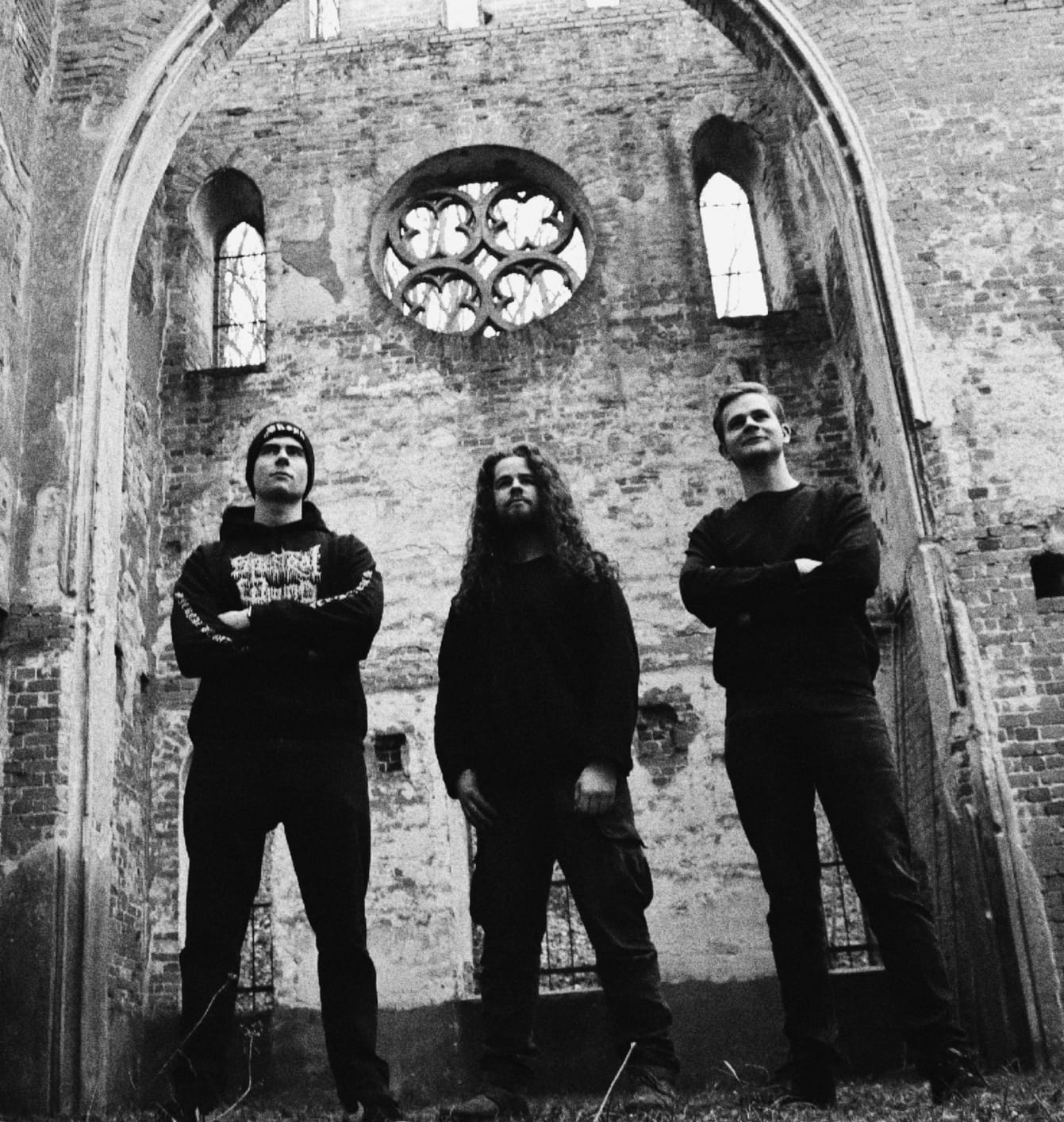
HKSPK are:
Jim – vocals, lead guitar
Leon – rhythm guitar
Arne – drums
discography:
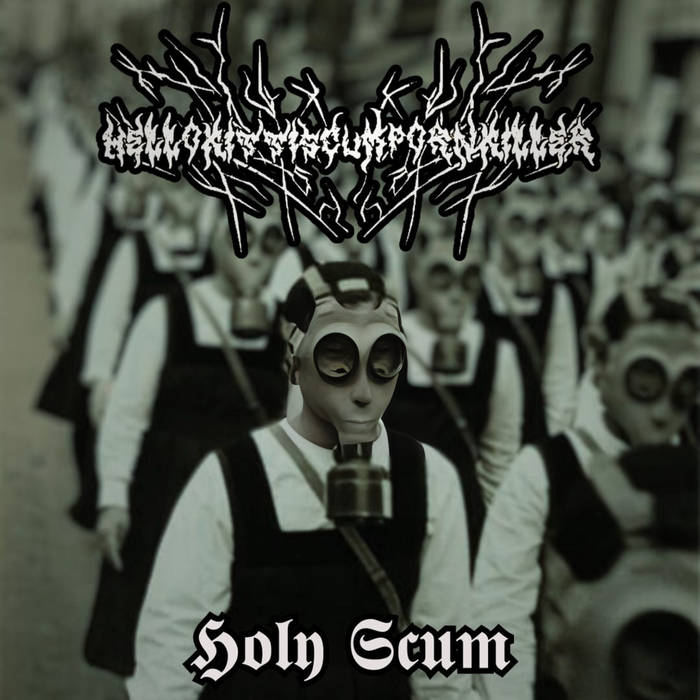
album

EP

Brandenburg based black and death metal band HKSPK are set to release their second full length album, ‘Heimkehr‘, on September 11, 2026.
Spanning eight tracks and approximately 25 minutes, the record presents a raw and uncompromising combination of cold black metal atmosphere and the physical weight of death metal, while opening its sound to melodic, atmospheric, doom laden and occasionally punk driven elements.
Formed in Brandenburg in 2023, HKSPK have developed their music, arrangements and production entirely within the band.
Following their debut album ‘Holy Scum‘ in 2024 and the EP ‘The Human Butcher‘ in 2025, the two singles ‘Torture‘ and ‘Rot In Despair’ have already offered a first glimpse into the musical direction of ‘Heimkehr‘.
The new album takes that foundation considerably further, bringing together different shades of extreme metal without sacrificing the directness that defines the band’s approach.
Recorded, mixed and mastered by HKSPK themselves at Room13, ‘Heimkehr‘ deliberately retains a raw and immediate character.
Rather than polishing away every trace of imperfection, the production allows the physical impact of the performances to remain at the forefront.
The result is an album that feels direct, intense and grounded in the band’s own creative identity.
Musically, ‘Heimkehr‘ refuses to follow a single straight path.
The album opens with ‘Prelude‘, a short atmospheric introduction written in the same key and tempo as ‘Torture‘, allowing the two pieces to flow directly into one another.
From there, HKSPK move between fast black metal passages, classic death metal, melody, doom, punk and atmospheric sections, creating considerable variation within a relatively compact running time.
‘Torture‘ quickly turns that atmospheric opening into aggression.
Beginning with a melodic black metal character, the track erupts into faster riffing and high pitched screams, while its lyrics explore how fear, exaggeration and misinterpretation can transform an otherwise harmless situation into something entirely different.
‘White Secretions II‘ takes a markedly different approach, returning to the crude humour and self irony already associated with the band’s debut.
Built around a disastrous night following a show in Leipzig, the track turns excessive drinking, tequila and the long drive home into a deliberately chaotic tour story.
Musically, it also reconnects with ‘White Secretions I‘ from ‘Holy Scum‘, creating a direct link between the band’s first album and its new chapter.
With ‘Sonnenjäger‘, HKSPK move into darker and more epic territory.
Drawing on imagery of war, nature and mythology, the song introduces a mysterious figure who can be interpreted as fate, death or even hope.
Heavy riffs and an epic atmosphere give the track a classic death metal character, while its narrative remains deliberately open to interpretation.
‘Kill The Weak‘ is perhaps the most immediate and punk driven moment on the record.
Its provocative title and chorus function as an aggressive mantra rather than a literal instruction, while the lyrics focus on loss of control, fragmented memory, humiliation and anger.
Black metal, punk, hardcore and elements of thrash come together in a track built around speed, directness and sheer impact.
The emotional center of ‘Heimkehr‘ arrives with ‘Rot In Despair‘.
One of HKSPK’s most personal and intense compositions, the song explores despair, isolation and mental exhaustion, drawing inspiration from experiences involving people close to the band.
Musically, its restrained construction is particularly effective, with a verse based on just two chords gradually developing into an increasingly atmospheric climax. Instead of relying on constant musical excess, the track creates its weight through reduction.
‘Rain In The Face‘ takes inspiration from motifs associated with the historical Lakota figure of the same name, while deliberately avoiding the structure of a conventional biography.
The song follows a wounded warrior whose experiences, captivity, survival and eventual revenge shape his identity, only for victory to offer no genuine redemption.
Cold, driving black metal supports a strongly narrative vocal performance, giving the track an almost cinematic quality.
The album concludes with its title track, ‘Heimkehr‘, a more than six minute piece of atmospheric black metal that brings together many of the record’s central themes, memory, brotherhood, loss, emptiness and the consequences of past battles.
Its title suggests a return to safety, yet the song offers no such comfort.
The journey may be over, but the damage remains, and returning home does not mean returning unchanged.
That unresolved feeling is central to the album.
‘Heimkehr‘ is not a conventional concept record, but its eight tracks form a connected journey through loss of control, war, despair, revenge, memory and dark humour.
Some stories originate in the band’s own experiences, others involve people close to them, while historical motifs are freely interpreted rather than presented as documentary accounts.
Reality remains at the heart of the material, but HKSPK heighten it until it fits the music.
The band’s live reputation has developed alongside their recorded work.
HKSPK have shared stages with Asagraum, Enisum and Waldgeflüster and have appeared at M.U.R. Open Air, Godless Mountain Open Air and Summer Ends, as well as playing a headline show in Brno.
Their live performances reflect the same directness found on the album, with little distance between the music and the audience.
Released independently, ‘Heimkehr‘ will be distributed digitally through DistroKid, while a limited physical edition of just 50 CDs will be available through Bandcamp.
With its combination of black metal coldness, death metal weight, melodic passages, doom laden atmosphere and punk energy, the album presents HKSPK as a band willing to let different influences collide without losing their identity.
‘Heimkehr‘ arrives on September 11, 2026, and its final message is anything but comforting.
The destination may be reached, the noise may have faded, but what happened along the way cannot simply be left behind.
You return home, but you do not necessarily return whole.