On Life, Loss And Human Connection
Interview with Georgina Strilakos from the American female dominated trio
3RD VAIN
By Fok ‘bs’
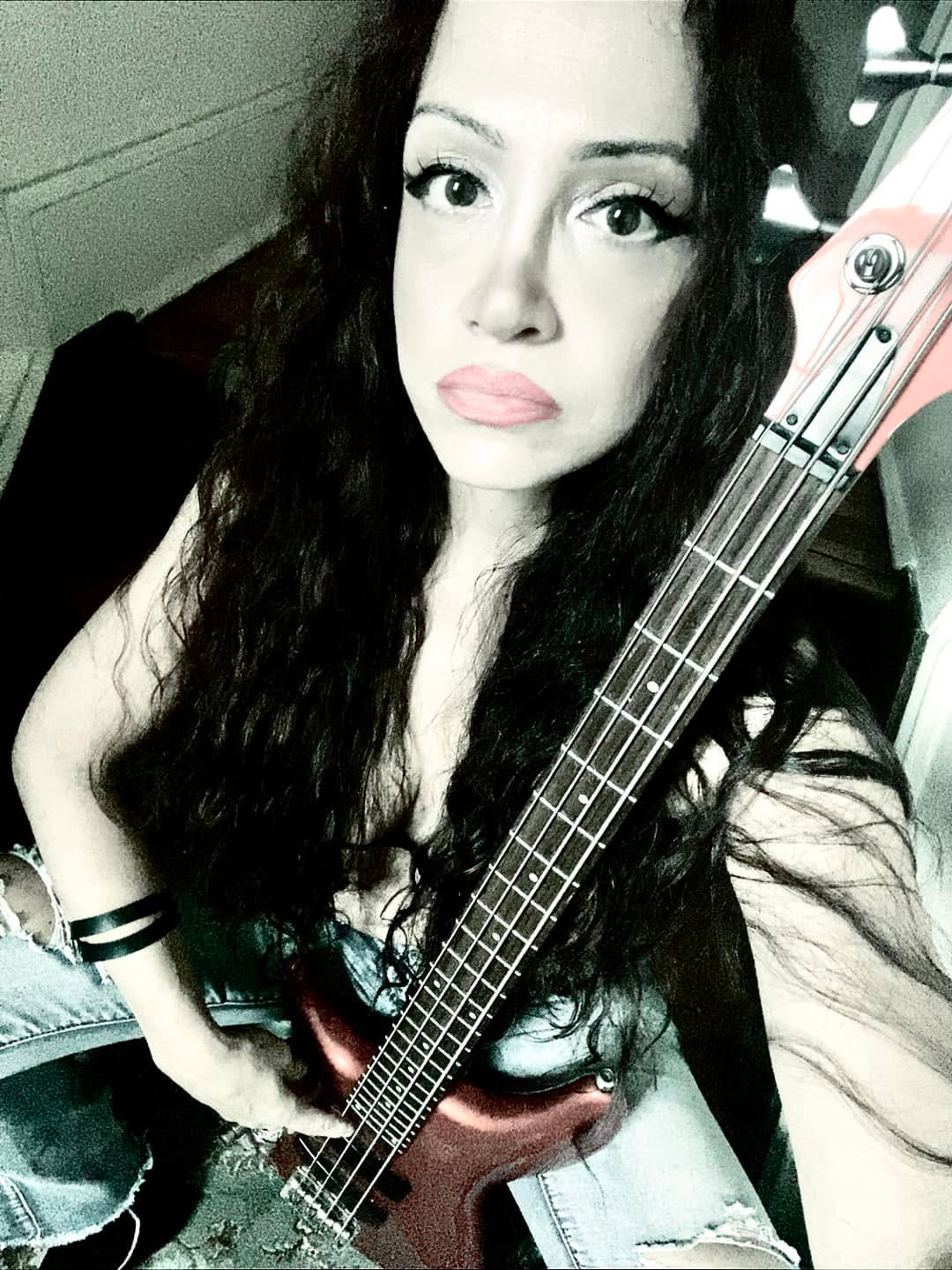
In this interview by Fok ‘bs‘, we speak with our Radio Highway Pirates coworker Georgina Strilakos, vocalist and member of the American female dominated trio 3rd Vain.
With their album ‘What’s Your Frequency?‘, 3rd Vain explore the experiences that shape who we become, from love, loss and heartbreak to grief, forgiveness, technology and the search for meaning.
Georgina takes us deep into the ideas behind the album, discussing why music should start conversations rather than provide easy answers, how vulnerability and aggression reflect real life, and why choosing your own frequency ultimately means taking responsibility for the person you become.

“Life isn’t just about what happens to you. It’s about what you choose to carry forward from every experience.”
“Every experience leaves something behind and shapes who you become.”
“Technology isn’t the villain. It’s an amplifier.”
“Nobody lives in one emotional state.”
“Art is never truly finished. It is released.”
“Emotion always comes first.”
“The goal was never just to sing. It was to communicate.”
“The challenge isn’t pretending we’re completely free from that programming. The challenge is becoming aware of it.”
“We didn’t make this record to give people all the answers. We made it to start a conversation.”
“Music has the ability to outlive us.”
“We’re not trying to become one identical voice. We’re three different people having one honest conversation through music.”
“Our differences don’t separate us. They create the identity of the band.”
“Human beings won’t change. People will still experience love, loss, heartbreak, regret, laughter, friendship, guilt, hope, and the uncertainty of not knowing what comes after we’re gone.”

“We only have one life. As we grow older, we realize how limited our time truly is. So, make it count. Find your purpose, if you can. Love deeply. Forgive when you can and if they are worthy of forgiveness. And choose your own frequency while you still have the chance.”

“If the album creates even a small moment of reflection, connection, or understanding, then that means everything.”
Read Georgina’s Album Reviews at
Radio Highway Pirates:

Listen to Georgina’s Shows at
listenradiohp.net:


The album asks, ‘What’s Your Frequency?‘ as if it’s a question every listener has to answer for themselves.
When did that question first become meaningful to you personally?
“That question became meaningful the moment I realized life isn’t just about what happens to you – it’s about what you choose to carry forward from every experience. Every moment changes your frequency in some way. Love, loss, heartbreak, pain, joy, regret, forgiveness – even the nights where you’re simply laughing because you’ve had a drink and texted an Ex. Every experience leaves something behind and shapes who you become. Good or bad. Death, especially, changed the way I see life. Full stop. It made me stronger and weaker at the same time. When you lose someone, you realize our time here is finite. We are all living on borrowed time, and death is the one promise none of us can escape. That realization made me stop asking, ‘Why is this happening to me?’ and start asking, ‘Who am I becoming because of it?’ That’s really what this album is asking. We don’t answer that question for the listener – we invite them to answer it for themselves. If people hear these songs and find pieces of their own lives reflected back at them, then we’ve done exactly what we hoped to do.”
Many modern metal albums talk about darkness, but yours often feels like it’s observing it rather than glorifying it.
Was that an intentional distinction from the beginning?
“Absolutely. Darkness is part of being human, but it doesn’t have to define who we are. There can actually be a strange serenity in accepting death. Depending on your religion, spirituality, or personal beliefs, death can be seen as a transition, a rebirth, or simply the natural conclusion to life rather than something to fear. None of us should fear the inevitable. People have very different relationships with death. Some mock it, some welcome it, some spend their entire lives fearing it, while others quietly accept it as part of existence. None of those perspectives are inherently right or wrong – they’re deeply personal. There are people that look forward to seeing their loved one in the cemetery and find it comforting and some don’t. Its personal. We’re far more interested in understanding those perspectives than glorifying darkness or even evil itself. This album is about confronting it, learning from it, the ceremonial aspect and asking what it means to be human in the face of it. There is a lot of variety here in our songs lyrically. These songs come from real experiences – loss, heartbreak, guilt, self-doubt, questioning whether we’re worthy of forgiveness, and wrestling with ideas of heaven, hell, and whatever may come after we’re gone. Those subjects are deeply personal, but they’re also universal. The goal was never to glorify pain. Death is something every one of us will face, and very few people make it through life without experiencing suffering. But death can also be a celebration of a life well lived, a release from pain, or the beginning of something else, depending on what you believe. That’s the conversation we wanted to have.”
Several songs deal with technology and human disconnection.
Do you see technology as the villain of the story, or simply as a mirror reflecting what was already happening inside us?
“Technology isn’t the villain – it’s an amplifier. If we’re disconnected from ourselves, technology often makes that disconnection louder. If we’re building meaningful relationships, it can strengthen those as well. Like any powerful tool, it can either bring people together or quietly pull them apart. Our frequency doesn’t begin with our phones or our screens. It begins with our awareness, our values, and the energy we bring into the world every day. Technology simply reflects what we’re already broadcasting. That said, I do think technology has changed the way we live. You can spend twelve hours in front of a computer and never feel the need to leave your house. For many people, especially younger generations, that’s become normal. Technology can make us more isolated, more reclusive, and convince us that loneliness is simply part of modern life. In this decade, it is a reality. At the same time, for people without a large family or close circle of friends, it can also be a lifeline. It can create communities that otherwise wouldn’t exist. Like everything else, it’s about how we choose to use it. Technology doesn’t decide our frequency and behavior – we do.”
The emotional dynamics throughout the album constantly shift between vulnerability and aggression.
Do you write those contrasts consciously, or do they naturally emerge from the songwriting process?
“A bit of both, but mostly they happen naturally because that’s what life feels like. Life is unpredictable. You’re driving your own car, trying to stay in your lane, but other people, circumstances, and unexpected events can influence your direction before you even realize it. Nobody lives in one emotional state. Anger often hides grief. Strength is often born from vulnerability. Sometimes the deepest pain comes out as silence, and other times it comes out as a scream. But life also has humor. There’s a song on the album that’s simply about getting tipsy, enjoying yourself, and texting your ex. That’s real life too. It belongs on this record just as much as the heavier songs because life isn’t one emotion. It’s messy, contradictory, heartbreaking, hilarious, and beautiful – often all at the same time. We wanted the album to reflect that emotional reality rather than force everything into one mood.”
As an independent band, you have complete creative freedom.
Has that freedom ever become intimidating because there is nobody telling you when something is ‘finished‘?
“Definitely. Freedom is exciting, but it also comes with responsibility. Nobody tells you when to stop. Nobody tells you, ‘This is the final version’. At some point, you have to trust your instincts and understand that perfection doesn’t exist. Art is never truly finished – it is released. There comes a moment when you have to let the music leave the studio and become something bigger than yourself. The songs no longer belong only to us; they belong to the people who connect with them.
Being independent gives us the ability to follow our own vision, and that’s a beautiful thing. We can take risks, explore different ideas, and create without someone else putting limits on what we should or shouldn’t be. It’s challenging, but it’s also one of the most rewarding parts of being a band like 3rd Vain. We get to drive our own journey, and there’s something incredibly powerful about that.”
Georgina, your vocal performance moves from almost whispered intimacy to explosive screams.
Do you approach your voice like another instrument, or is it always driven purely by emotion?
“Emotion always comes first.
I’m an American of Mediterranean descent, and I think that passion and intensity are naturally part of who I am. I feel things deeply, and that emotional connection is what drives my performance. Technique allows emotion to survive night after night, but emotion is what gives every note meaning. Sometimes a whisper carries more power than a scream because it forces people to lean in and listen. Other times, only a scream can express what’s happening inside or deliver the message a song needs.
Every vocal choice serves the emotional truth of the song. I’m not an opera singer, and I’ve never wanted to approach vocals from a place of perfection alone. Some of the greatest frontwomen and frontmen use their voices almost like storytelling tools. They bring in spoken-word elements, conversational tones, and raw human expression before pushing into more extreme moments.
Thank you for noticing that, because it was absolutely intentional during the songwriting and recording process. The goal was never just to sing – it was to communicate.”
The title ‘In The Code‘ could easily be interpreted as being about software, but it can also describe human behaviour.
Are we all following invisible programming that we’re barely aware of?
“I think we are. We’re shaped by our families, our culture, our experiences, our fears, our losses, our beliefs, and the stories we tell ourselves. All of those things become part of our internal code.
Some of that code is inherited. Some of it is learned. Some of it is written through trauma, love, environment, and the people who influence us along the way. The challenge isn’t pretending we’re completely free from that programming. The challenge is becoming aware of it. Once we recognize our patterns, we have the ability to rewrite them. We don’t have to let our past experiences, our upbringing, or the things that happened to us completely define where we go next. Understanding our code gives us the opportunity to change it or if we choose to just maintain it.”
The album never seems interested in giving listeners easy answers.
Do you hope people leave with more questions than they had before pressing play?
“Absolutely. Questions are where growth begins for us as humans.
Life isn’t easy. Maybe for some people it appears that way from the outside, but everyone carries something. Everyone faces moments where they question themselves, their purpose, their choices, and what they truly believe. Maybe they start thinking about what they’re afraid of, be it a person or thing, what they believe happens after death, whether they’ve forgiven themselves for their mistakes, or what kind of legacy they want to leave behind. If the album creates even a small moment of reflection, connection, or understanding, then that means everything. At the end of the day, we didn’t make this record to give people all the answers. We made it to start a conversation. And if someone listens and says, ‘I felt that’, or ‘I’ve been through that too’, then that’s mission accomplished.”
Groove metal often relies on physical impact, but ‘What’s Your Frequency?‘ also demands emotional attention.
Which reaction feels more rewarding to you: someone headbanging or someone telling you a song genuinely changed the way they think?
“Honestly, both. Watching people lose themselves in the music is an incredible feeling because that is pure connection in the moment. The metal community is one of the most passionate communities I’ve ever experienced. It feels like a family – a place where people can come as they are without judgment. We don’t ask people to be anything other than themselves. Seeing someone headbang, dance, or completely lose themselves in a song is a beautiful thing because music is meant to be felt physically as much as emotionally. But when someone tells you a song changes the way they think, helped them through something, or gave them a different perspective, that reaches another level. That is the deeper purpose of music. Music has the ability to outlive us. If something we created helps another person carry their own life with a little more understanding, strength, laugh, or give hope, that is one of the greatest rewards an artist can experience. For us, that’s the ultimate connection.”
If each member of 3rd Vain could choose one song from the album to represent who they are as musicians today, would all three choices be different?
“I think they would, and honestly, that’s one of our greatest strengths. Each of us has lived different experiences, lost different people, faced different struggles, and learned different lessons. Those individual journeys shape the way we connect with the music. One person might connect with a song because of the lyrics. Another might connect because of the emotion, the flirtation, rhythm, or the energy behind it. We’re not trying to become one identical voice. That will never happen. We’re three different people having one honest conversation through music. That’s what makes 3rd Vain what it is. Our differences don’t separate us – they create the identity of the band. We have fun too. And by the way, that’s a really great question because it speaks to something important: every listener will also have their own song that represents their own journey.”
Your music combines groove metal, progressive structures, industrial textures, and cinematic atmospheres without sounding forced.
At what point does experimentation become too much, even for 3rd Vain?
“Experimentation becomes too much when it exists only to prove that you can do something. For us, it was never about adding complexity just for the sake of being technical. We are not a technical three-piece band. The goal for us was always about serving the song and creating something that feels honest. It’s that simple. A lot of it came from having fun and finding that natural synergy between us as people and musicians. When ideas come together organically, that’s when the magic happens. We also wanted to create a sound that could reach beyond the traditional boundaries of metal. Sometimes metal can place itself inside a box, and we wanted the freedom to explore. We wanted heavy music with a hard kind of edge edge, but also something relatable, accessible, and emotionally connected to people from all walks of life. At the end of the day, the music has to make you feel something. Big feeling or small. Whether someone wants to Virgoean analyze every layer or simply groove along and connect with the emotion, that’s what matters.”
Imagine someone discovering your band ten years from now without knowing when ‘What’s Your Frequency?‘ was released.
What part of the album do you believe will feel timeless rather than tied to today’s world?
“Technology will continue to change. Human beings won’t. I’d love a robot though! People will still experience love, loss, heartbreak, regret, laughter, friendship, guilt, hope, and the uncertainty of not knowing what comes after we’re gone. They will still wonder if they’ve lived a meaningful life or how they will die. They will still wonder whether the people they loved knew they were loved or if an ex partner hates or loves them, still. Those questions are timeless. The world around us may look completely different in ten, twenty, or fifty years, but the human experience remains connected by the same emotions and questions. That’s how I feel about the subject. As long as people continue searching for meaning, I hope this album still has a little something left to say.”
If ‘What’s Your Frequency?‘ were transformed into a film instead of an album, what would the final scene look like, and would it end with hope, uncertainty, or complete silence?
“The final scene would be quiet. Very quiet. I imagine something with the atmosphere of Blade Runner or a classic film noir, a world filled with shadows, reflection, and unanswered questions. The protagonist, standing alone after everything has happened. After all the chaos, the grief, the laughter, the heartbreak, and every question along the way, there is finally a moment of stillness. Just them, watching the sunrise.
Not victorious. Not defeated. Just aware. Aware that life is precious because it ends. Aware that death gives meaning to every choice we make while we’re here. Aware that no one else can choose a frequency for them. They take one last look at the horizon, and begin walking forward. The screen fades to black before we see where they are going. To me, that image alone is hope. I personally was raised as a child in a family that always had hope. Hence, I inherited that code and quality, even as a grown adult. It has stayed with me. We only have one life. As we grow older, we realize how limited our time truly is. So, make it count. Find your purpose, if you can. Love deeply. Forgive when you can and if they are worthy of forgiveness. And choose your own frequency while you still have the chance….
Thank you for the privilege of this interview. Stay well, everyone.”
With ‘What’s Your Frequency?‘, 3rd Vain have created an album that does not try to tell listeners what to think or how to feel.
Instead, it opens the door to questions about life, death, connection, identity and the experiences that shape us.
Georgina Strilakos makes it clear that the band’s music is rooted in honesty, emotional vulnerability and the freedom to explore without being confined by genre or expectation.
Ultimately, the album’s message is remarkably simple but deeply powerful.
We cannot control everything that happens to us, but we can decide what we carry forward from those experiences.
We can question the code we have inherited, rewrite the parts that no longer serve us and, above all, choose our own frequency while we still have the chance.
by Fok ‘bs‘
American Female-Dominated
Groove Metal Trio
3RD VAIN
Released Album
‘What’s Your Frequency?’
track-list:
My Storm Unchained
Slow Burn
Death Mask
In The Code
Never Say Die
Hell Got My Name
Darkness In Me
Our Own Making
Morbid Curiosity
Tipsy and I Know It
Whats Your Frequency

3rd Vain are:
Georgina Strilakos – lead vocals, bass
Sophia Pappas – drums
Damian Gonzalez – guitars, synth, background vocals
3rd Vain prove that a powerful metal album does not need excess to leave a lasting impression.
On their debut release, ‘What’s Your Frequency?‘, the independent trio from New Port Richey, Florida, delivers an emotionally charged collection of songs that blends crushing groove metal riffs, progressive songwriting, atmospheric textures, and striking vocal performances into one of their most ambitious statements to date.
Rather than chasing modern trends, the band focuses on authenticity.
Every song is driven by precision, emotional intensity, and a fearless approach to songwriting, moving seamlessly between haunting melodies, aggressive rhythms, and cinematic soundscapes.
Fronted by Georgina Strilakos, whose voice effortlessly shifts from fragile, intimate passages to raw, visceral screams, 3rd Vain create an album that challenges listeners instead of offering easy answers.
Lyrically, ‘What’s Your Frequency?‘ explores identity, isolation, mortality, fractured relationships, the growing influence of technology, and humanity’s struggle to remain connected in an increasingly disconnected world.
Instead of presenting solutions, the album encourages reflection, asking listeners to recognize the signals they often ignore, from inner doubts and emotional conflicts to the constant pressure of modern life.
Musically, the record combines groove driven heaviness with progressive arrangements, memorable hooks, and atmospheric depth.
The balance between technical musicianship and emotional storytelling allows each track to stand on its own while contributing to the album’s overarching narrative.
The result is a record that feels both intensely personal and universally relatable.
As an independent band, 3rd Vain continue to demonstrate that artistic freedom can be one of the greatest strengths in modern metal.
‘What’s Your Frequency?‘ reflects the band’s commitment to uncompromising songwriting and honest expression, establishing the female fronted trio as a compelling force within today’s alternative, industrial, and groove metal scene.