











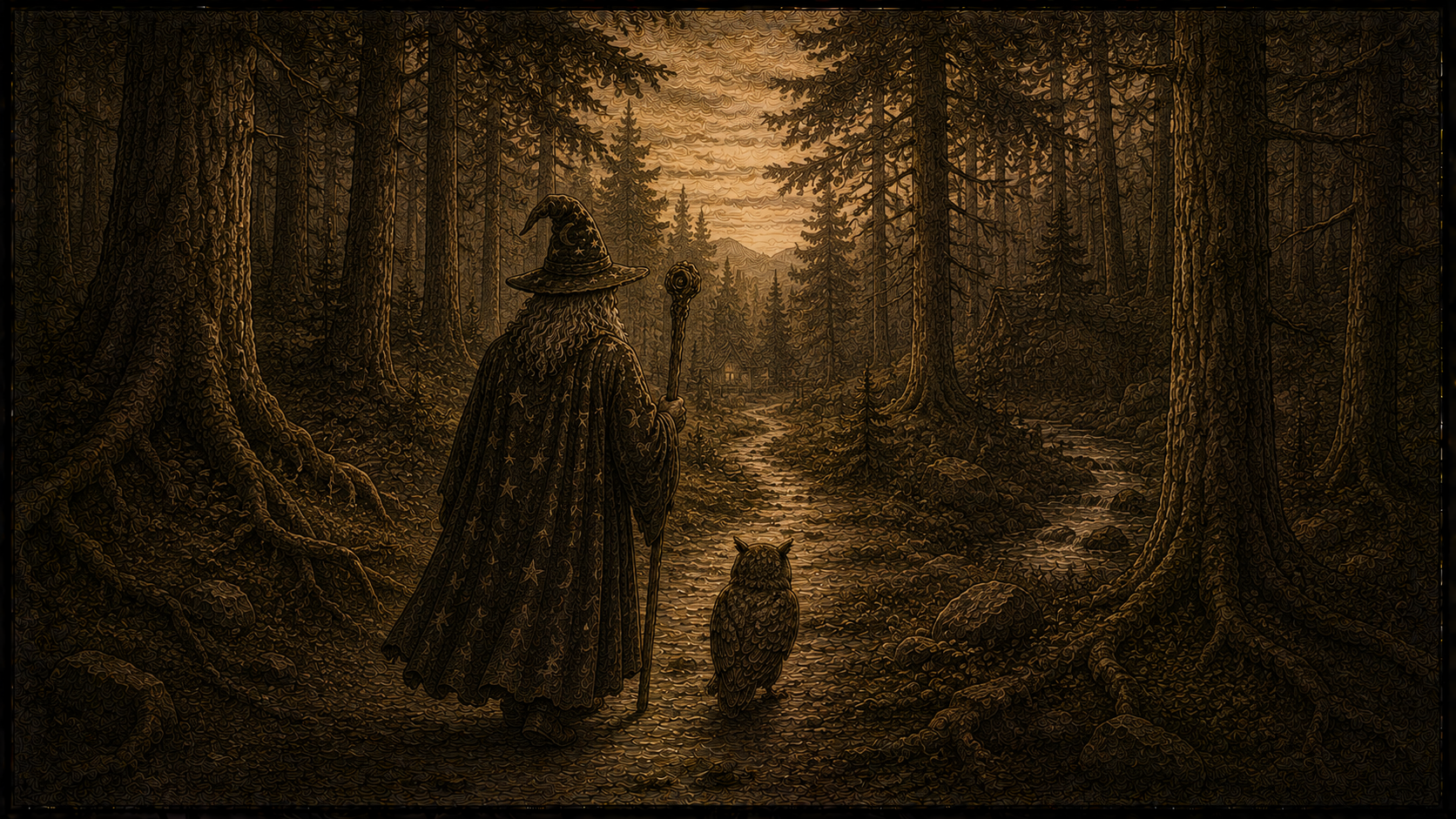


The Wizard
The Tale of the Two Kingdoms
by Fokion Triantafyllidis
at Radio Highway Pirates
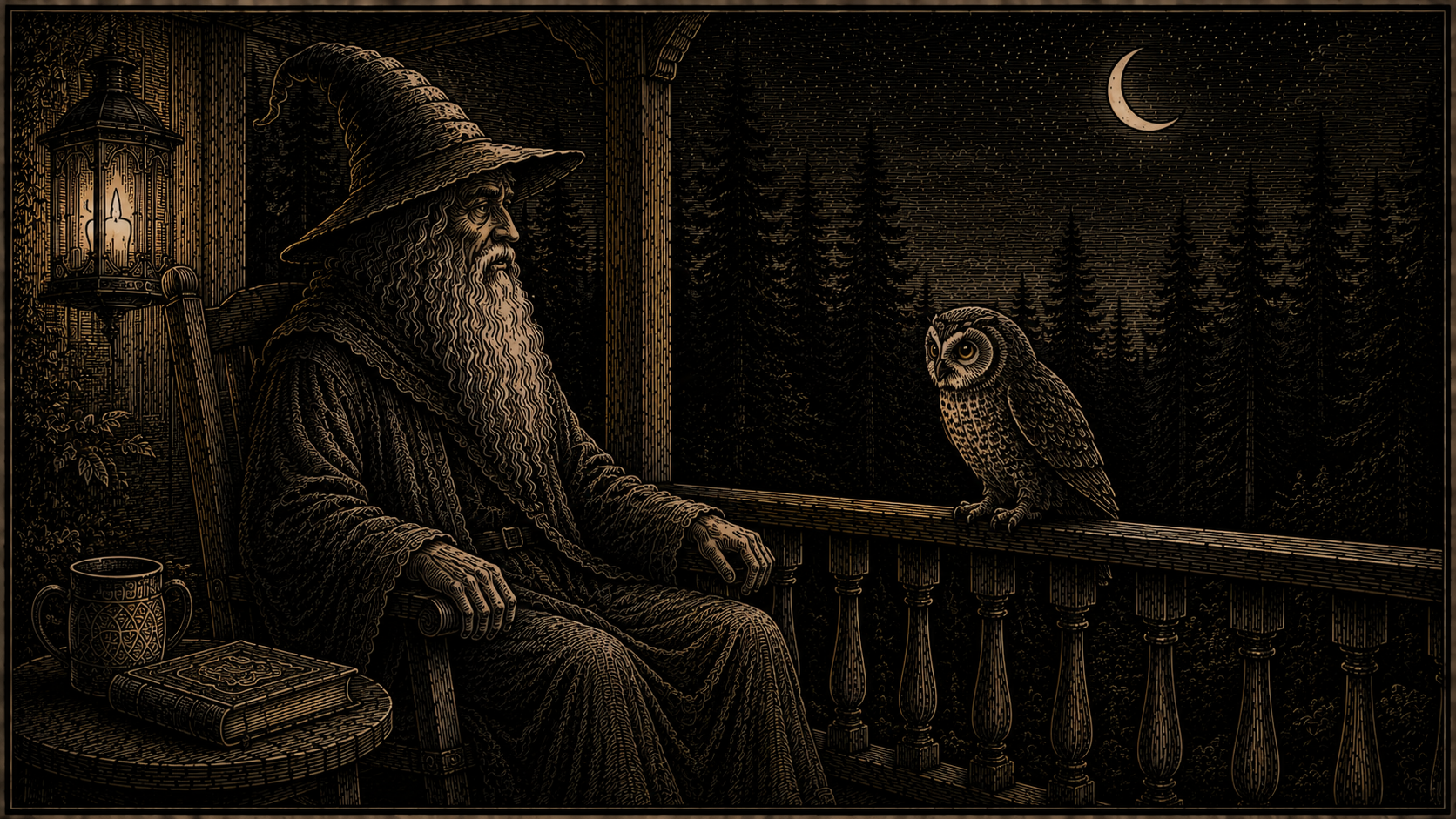
Once upon a time, on an evening when the last light had faded behind the Black Forest and the stars began to sew their silver threads across the heavens, the old and wise wizard sat upon the veranda of his little wooden cottage.
His rocking chair creaked softly beneath him.
Back and forth.
Back and forth.
The forest was peaceful.
Then came the little night owl.
She flew from between the dark pines and settled upon the railing beside the old man.
But this night she brought no cheerful greeting.
“Master,”
she asked at once,
“why are there wars?”
The rocking chair became still.
“Why can the peoples of the earth not live beside one another in peace? Why must one kingdom hate another?”
The old wizard looked at her.
There was such innocence in her great eyes that for a moment he seemed unwilling to answer.
At last he rose.
“Come with me, little one.”
“Where are we going?”
“To a place where you may find your answer.”
The wizard took his staff, and together they entered the forest.
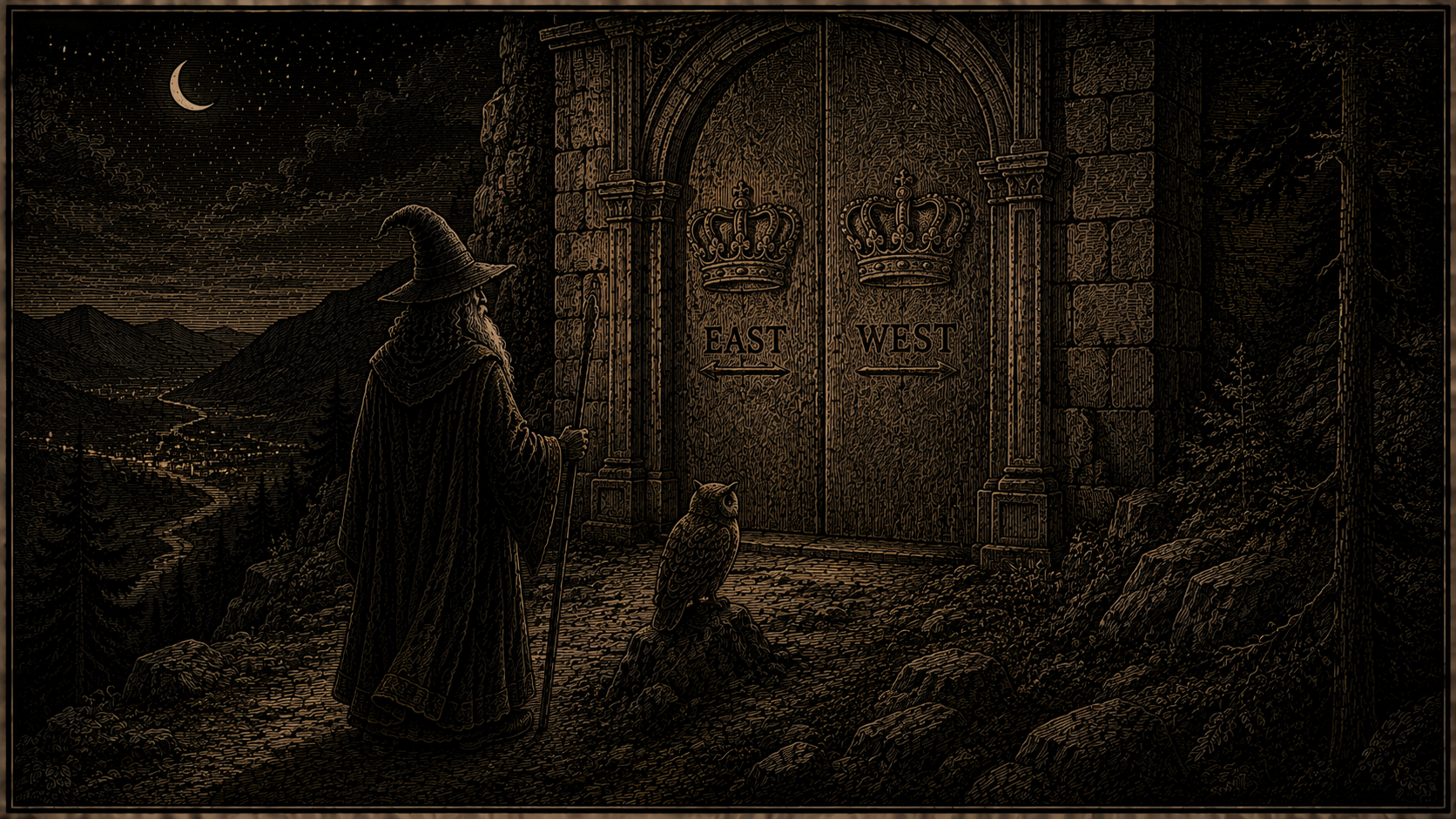
They walked until they came to a hill upon which stood an ancient stone gate.
Upon the gate were carved two crowns.
One faced east.
The other faced west.
The wizard touched the stone with his staff.
The gate opened.
“Look,”
he said.
And the little owl looked.
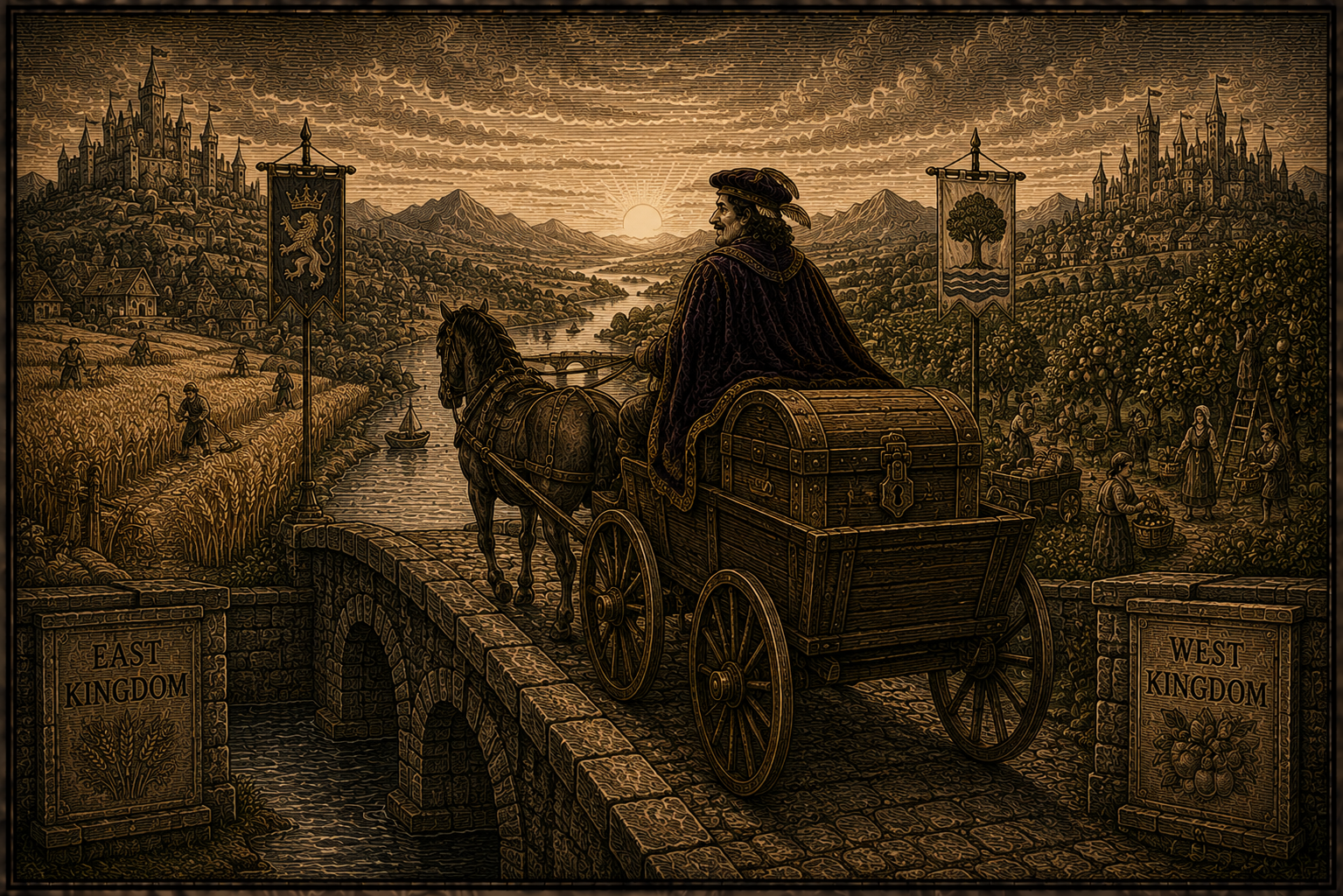
Beyond the gate lay two kingdoms.
Between them flowed a narrow river.
The people of the eastern kingdom grew wheat upon golden fields.
The people of the western kingdom tended orchards heavy with apples and pears.
The eastern folk crossed the river to trade their bread for fruit.
The western folk crossed it to trade their fruit for bread.
Their children played together upon the riverbanks.
There were schools where young minds learned to read the ancient books, and houses where the sick and the old were cared for.
When someone built a house, neighbours came from both sides to help.
And when the harvest was done, music could be heard from one kingdom to the other.
“Why have you brought me here?” asked the owl.
“Wait,”
said the wizard.
Years passed before her eyes as swiftly as clouds before a storm.
The two old kings died.
Their sons inherited their crowns.
Now the King of the East looked across the river and saw the orchards of his neighbour.
“How rich those lands are,”
he said.
And the King of the West looked toward the golden fields.
“How rich those lands are,”
he said.
One day a merchant dressed in velvet came to the eastern king.
He carried neither bread nor fruit.
Instead he opened a great wooden chest.
Inside lay swords.
“Your neighbour grows powerful,” whispered the merchant.
“You must protect your kingdom.”
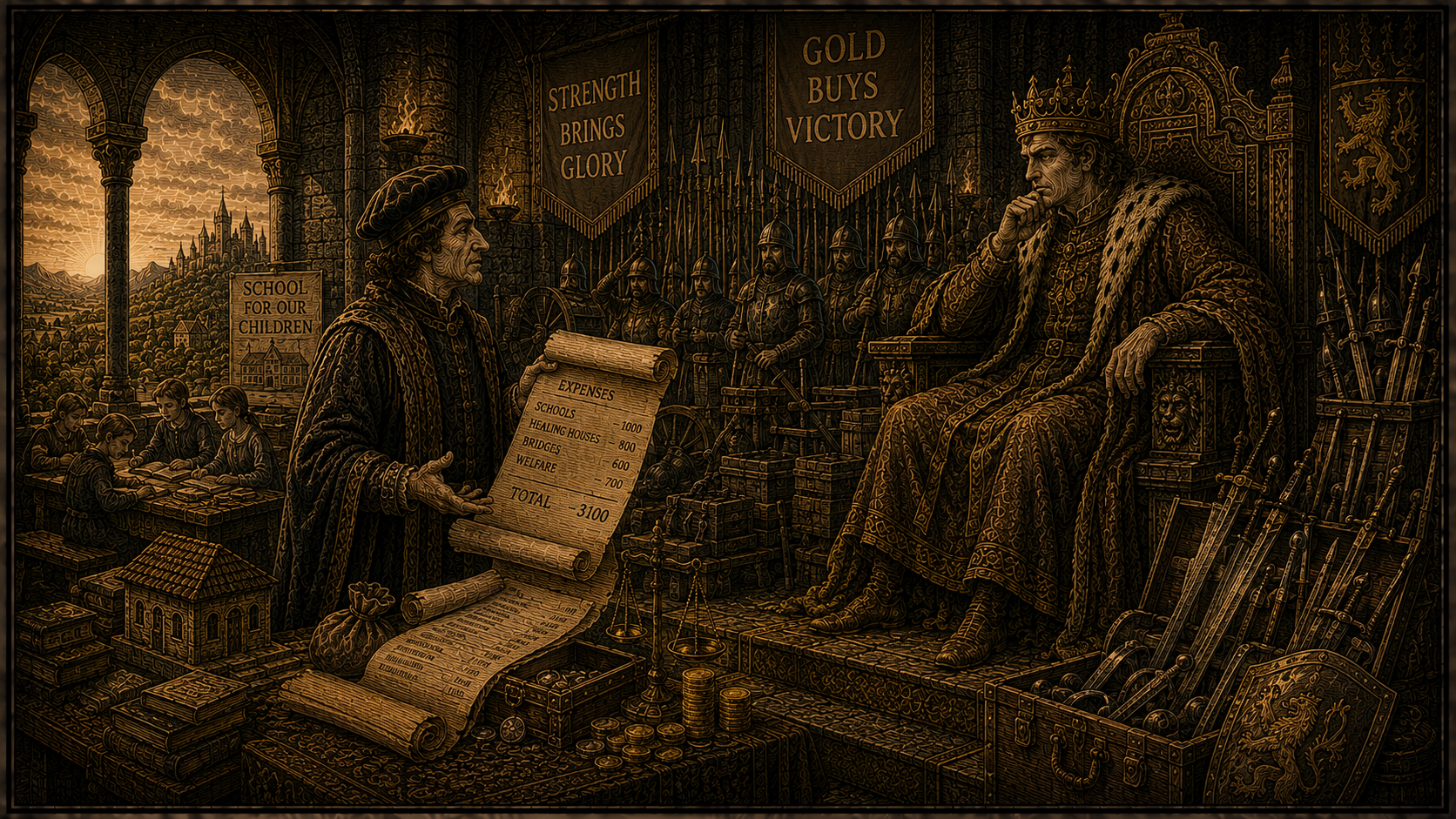
And so the king bought a thousand swords.
But a thousand swords cost a thousand pieces of gold.
The royal treasurer bowed before the king.
“Your Majesty,”
he said,
“this is the gold with which we were to build the new school beside the river.”
The king waved his hand.
“The school can wait.”
Then came another order for armour.
Again the treasurer appeared.
“Your Majesty, this is the gold set aside for the house of healing.”
“The sick must wait.”
Then the king ordered shields and horses.
“Your Majesty, what of the grain we promised to the poor when winter comes?”
“They must make do with less.”
And so, little by little, the kingdom changed.
The swords grew more numerous.
The books grew fewer.
The armouries became larger.
The houses of healing grew poorer.
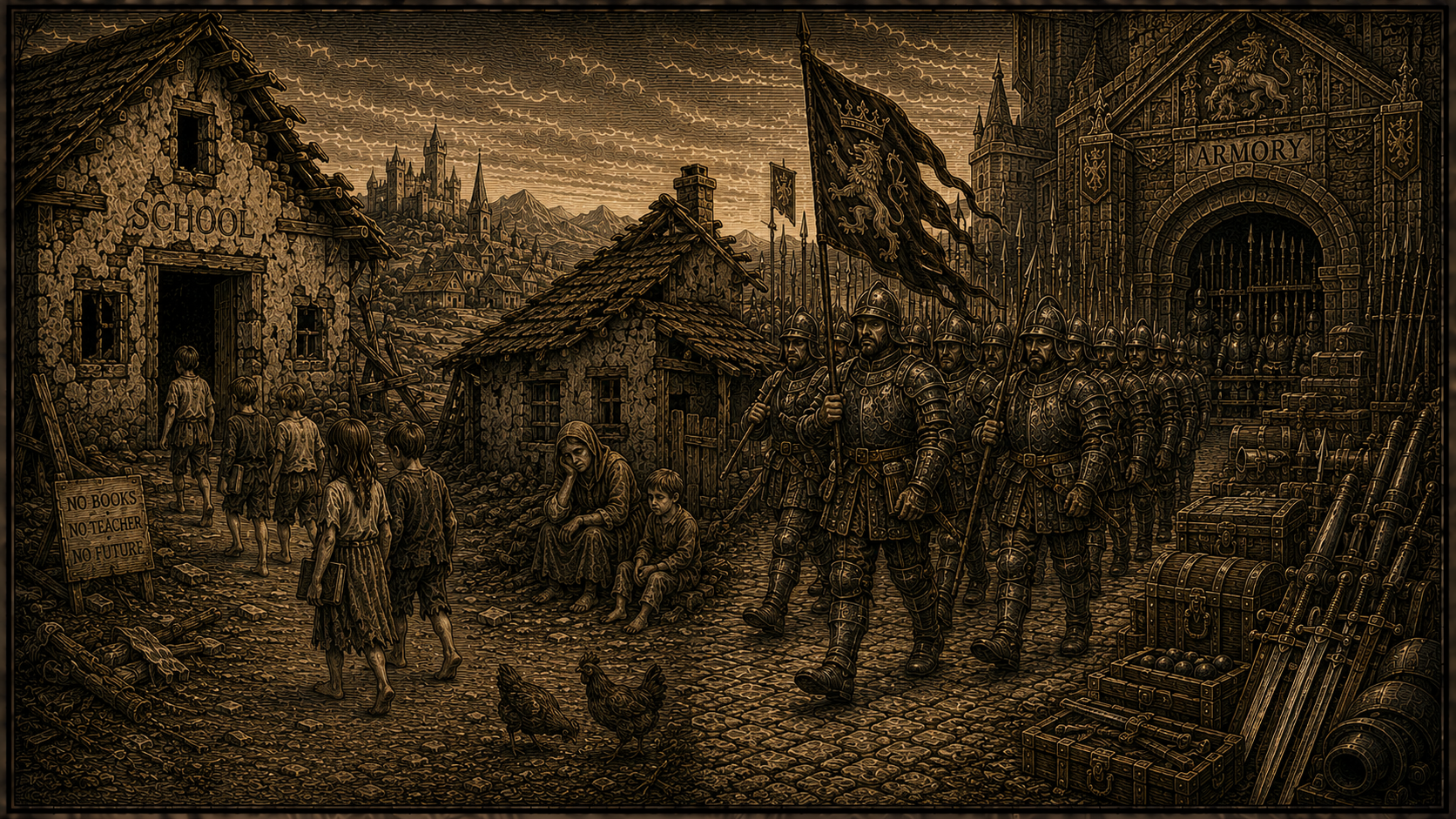
The soldiers received new boots, while children walked barefoot to crumbling schools.
And each time the king was told that there was no gold left for those in need, he answered:
“We must first make the kingdom safe.”
Across the river, the very same thing happened.
For the merchant had visited the western king as well.
“The King of the East has bought a thousand swords,”
he whispered.
“Surely you understand what that means.”
And so the western king bought a thousand spears.
The merchant returned to the East.
“Your neighbour now has a thousand spears.”
The eastern king became afraid.
“Then I shall need shields.”
The merchant smiled.
And so it went.
Swords were answered with spears.
Spears were answered with shields.
Shields were answered with armour.
And armour was answered with great machines of iron.
With every new fear, another school remained unbuilt, another healer went without medicine, another poor family was told to wait.
Yet the armouries never waited.
And neither did the merchants.
For soon the merchant in velvet was no longer alone.
Others had smelled gold upon the wind.
Some sold iron.
Some sold timber.
Some sold oil for lamps and fuel for furnaces.
Some owned great storehouses filled with grain, salt and flour.
And there were even those who bought such things not because they needed them, but because they knew fear was coming.
They filled barns with wheat while others went hungry.
They stacked timber behind locked gates.
They hid iron in guarded warehouses.
They stored oil in great barrels beneath the earth.
And then they waited.
When rumours of war spread, prices rose.
When the armies began to march, prices rose again.
And when mothers stood in the marketplaces searching for bread, the doors of the storehouses opened at last.
But a loaf that had once cost one copper coin now cost five.
A bundle of wood cost ten.
Iron became dearer than silver.
Oil was measured drop by drop.
The little owl stared in disbelief.
“But they already possessed these things,”
she said.
“Yes,”
answered the wizard.
“Then why do they ask so much more for them now?”
The old man’s face darkened.
“Because hunger can also be sold, little one.
And fear has always been a good customer.”
The owl said nothing.
Soon other men appeared behind the thrones and whispered into the ears of kings.
“Your people will call you weak if you do nothing.”
“History will remember the greater king.”
“The land beyond the river should have belonged to you.”
“The gods surely favour your crown.”
At last the two kings no longer saw farmers, bakers, mothers and children on the other side of the river.
They saw only enemies.
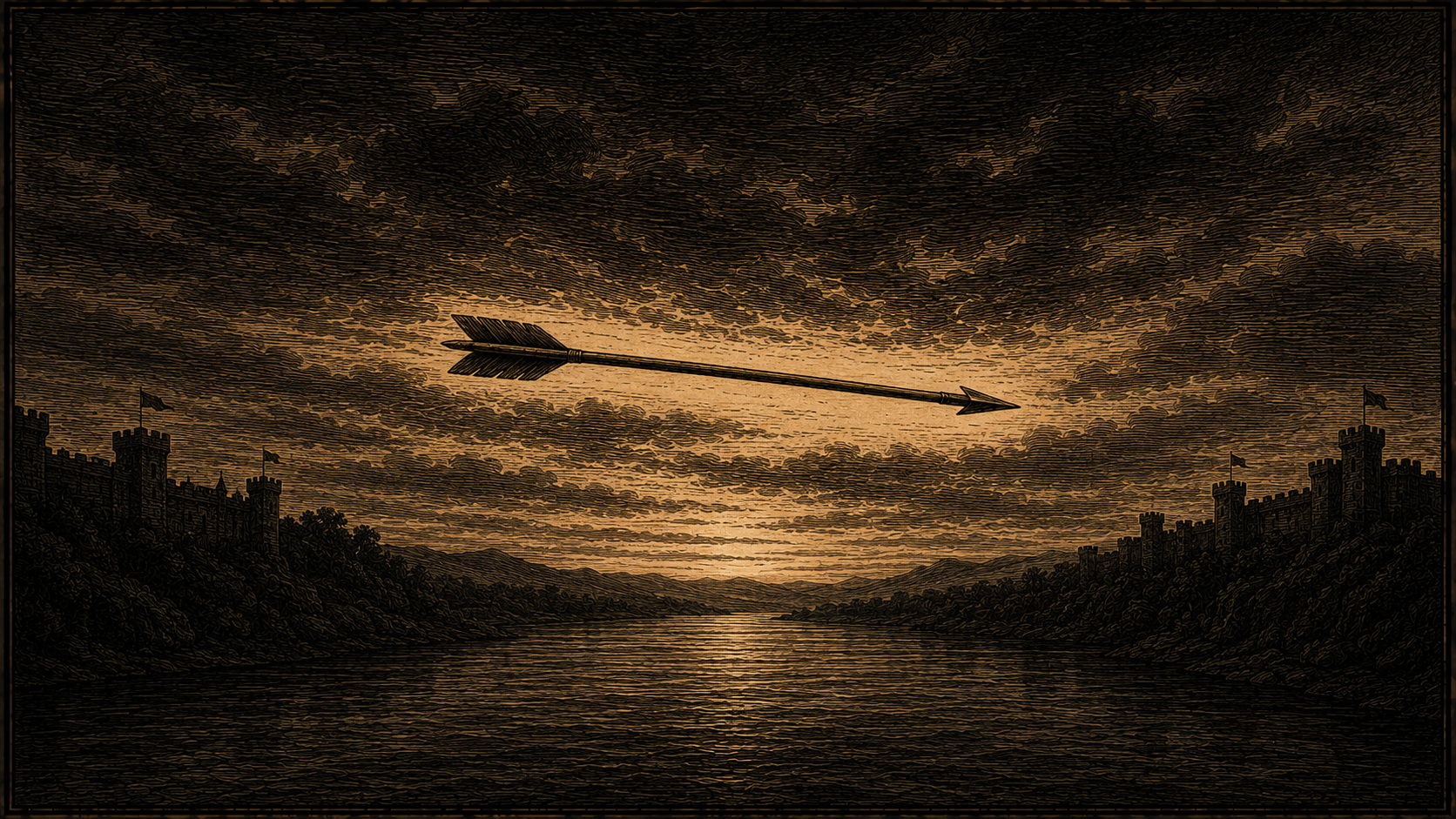
Then came the day when a single arrow flew across the water.
No one remembered who had loosed it.
It did not matter.
The eastern bells rang.
The western horns sounded.
And war began.
The little night owl watched in horror.
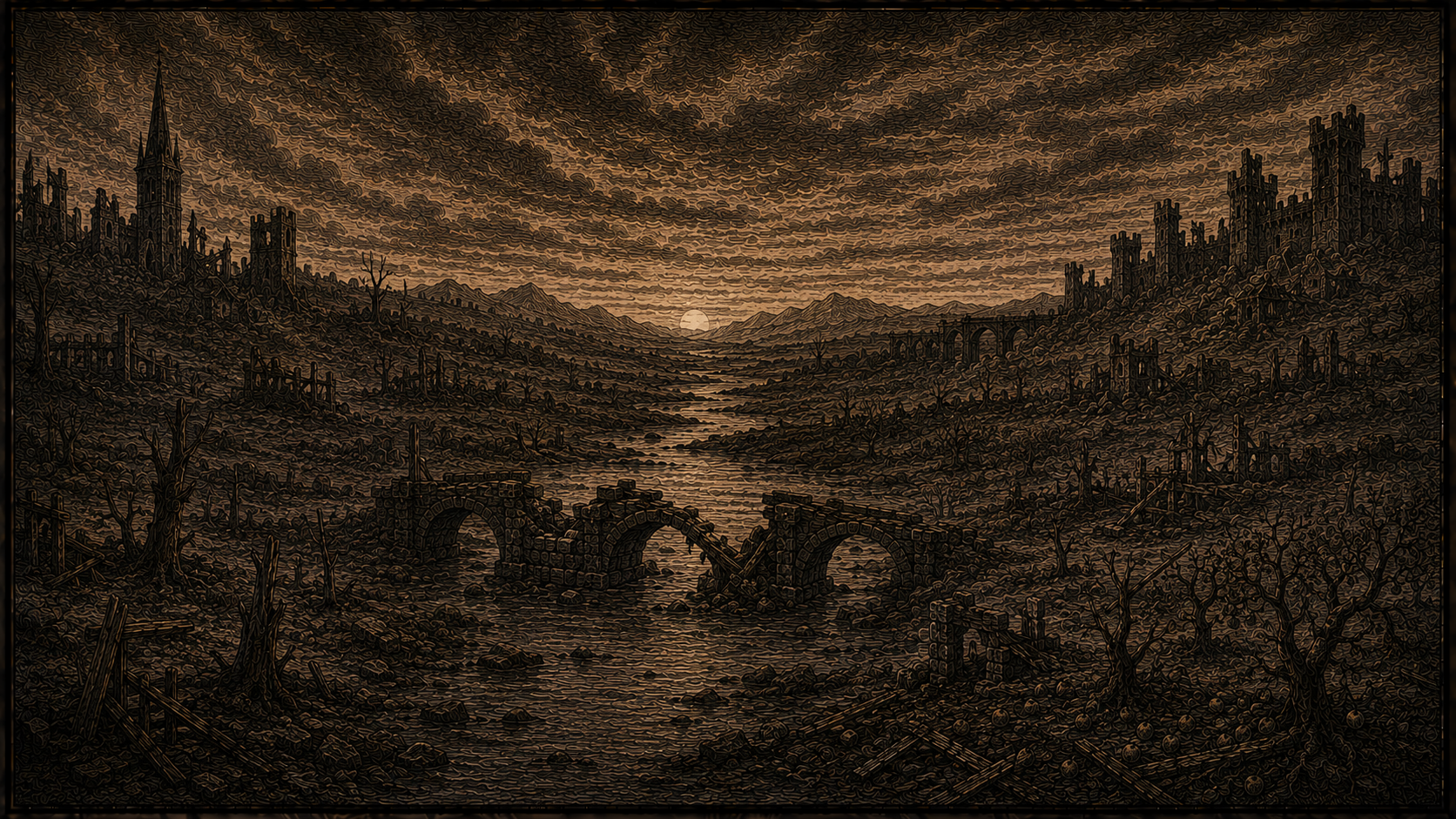
The golden fields burned.
The orchards were cut down.
The bridge upon which the children had once played collapsed into the river.
The schools closed, for their teachers had been sent away.
The houses of healing overflowed, though there was scarcely any medicine left upon their shelves.
Children who should have learned their letters learned instead to recognise the sound of approaching danger.
Old people waited for help that never came.
And families stood before empty market stalls clutching coins that could no longer buy what they had bought before.
Young men who had once traded bread and apples now stood opposite one another with swords in their hands.
Some never returned home.
Others returned carrying wounds that no physician could see.
Yet high upon the hill stood the merchants.
Those who sold weapons counted their gold.
Those who had hidden grain opened their barns.
Those who had hoarded iron, timber and oil unlocked their storehouses.
And with every burning house, every hungry village and every new army raised, their fortunes grew.
The little night owl turned away.
“Make it stop, Master.”
But the wizard did nothing.
“Please.”
Still he did nothing.
At last the war ended.
Not because either king had learned wisdom.
Not because one had defeated the other.
It ended because there was almost nothing left to destroy.
The owl looked again.
Where golden wheat had once moved beneath the summer wind, there was black earth.
Where the orchards had blossomed, only broken trunks remained.
The school beside the river had never been built.
The house of healing stood unfinished, its stones covered with weeds.
The two kings still wore their crowns.
And some of the merchants had become richer than kings.
But the people buried their children.
Then the owl noticed something beside the ruined bridge.
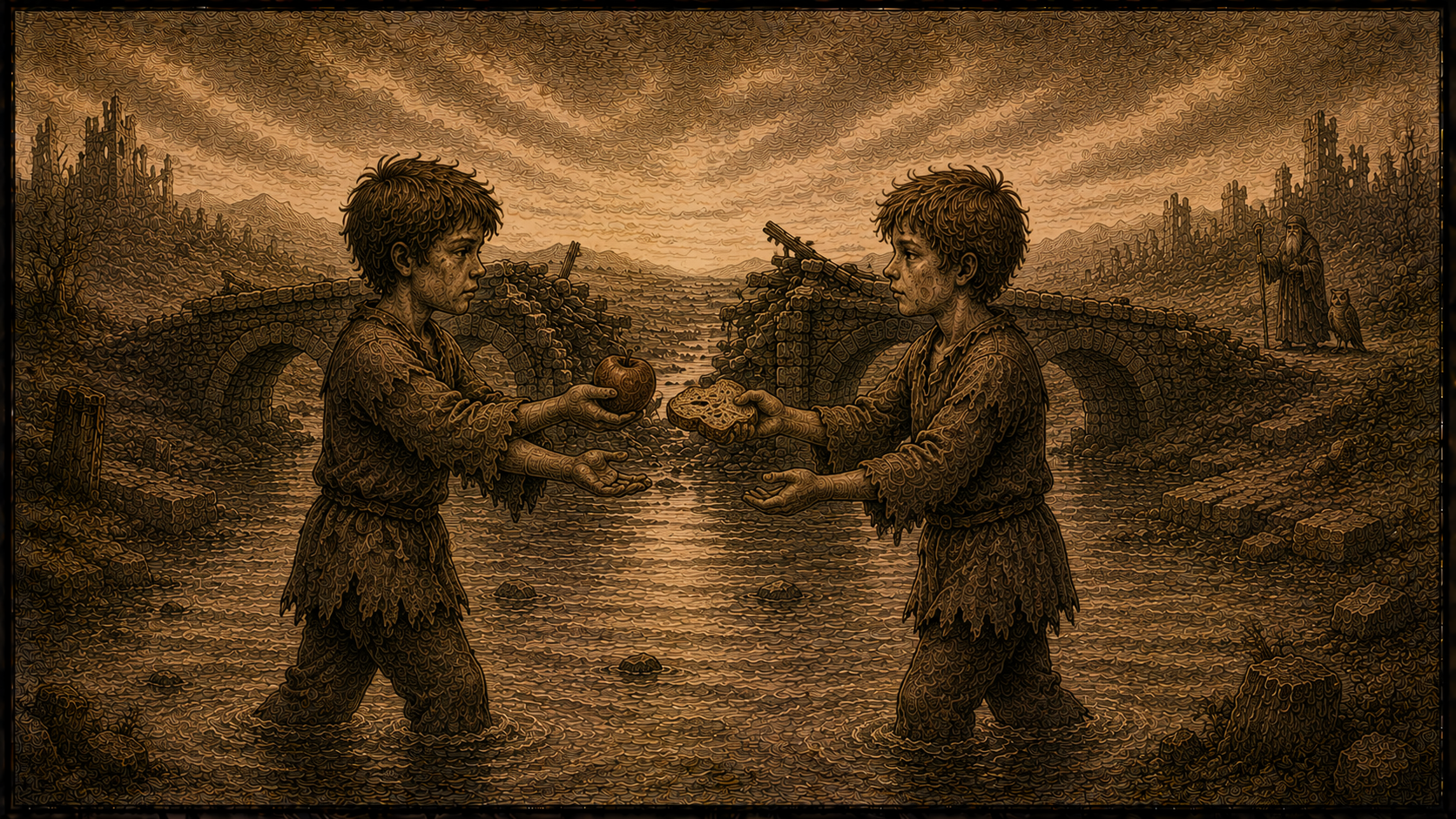
Two little boys were sitting upon opposite banks of the river.
One belonged to the East.
The other to the West.
Neither carried a sword.
One had a piece of bread.
The other had an apple.
For a while they stared at one another.
Then the boy from the East broke his bread in two.
The boy from the West cut his apple in half.
They waded into the shallow river and exchanged them.
The little owl’s eyes filled with tears.
“Then there is hope,”
she whispered.
The wizard looked at the two children.
“There is always hope.”
The owl turned eagerly toward him.
But the old man’s face remained sorrowful.
“Then why do you look so sad?”
“Because, little one, hope and wisdom are not the same.”
She did not understand.
The wizard pointed toward the distant palaces.
“Those children have already understood what their kings forgot.”
Then he pointed toward the storehouses upon the hills.
“And there will always be those who discover that fear can fill a purse, that hunger can raise a price, and that war can turn the suffering of many into the fortune of a few.”
The owl lowered her head.
“Then will there never be peace?”
The old wizard remained silent for a long time.
At last he said:
“Peace is like a garden. Every generation receives it for only a little while. If they tend it, their children may sit beneath its trees, learn beneath its shade, heal beneath its branches and eat of its fruit.
But if they spend all their gold building walls around the garden and sharpening swords to defend it, one day they may discover that there is nothing left inside worth defending.”
The little owl looked at him.
The ancient gate began to close.
Before it vanished, she looked once more at the two boys in the river.
They were laughing now.
Neither knew why their fathers had been enemies.
The stone gate closed.
The wizard and the owl walked silently back through the Black Forest.
When they reached the cottage, the old man returned to his rocking chair.
The little night owl remained upon the railing.
She had asked why there were wars.
Now she wished she had never known the answer.
At last she spread her wings.
“Good night, Master.”
“Good night, little one.”
She disappeared among the trees.
The wizard watched until even the beating of her wings could no longer be heard.
Then he looked toward the stars.
They shone as they always had, indifferent to crowns, borders and gold.
And somewhere far beyond the Black Forest, two children shared an apple and a piece of bread beside a ruined bridge.
Whether their children would one day do the same…
no wizard could foretell.