From The Seventies Into A New Dimension
British Progressive Rock Band
THE TIRITH
interviewed by Fok ’bs’

“We could never have written ‘Quetzalcoatl’ back in the 1970s. We have developed, and the music has a depth and greater breadth now.”

“We are not trying to be like anybody else. Our influences are wide, and that is part of what makes The Tirith unique.”
“We aim for simplicity. If it becomes more complex along the way, we follow where the music takes us.”
“A great song is still a great song, whether it was written yesterday or decades ago.”
“We like a story, but it isn’t essential. The music always has to work first.”
“Those old songs have to work in the modern world. That is the real test.”
“The best progressive music is not about showing complexity, it is about creating something meaningful.”
“You have to immerse yourself in the whole album to really understand it. The moods change, but the rock foundation remains.”
“After fifty years of songwriting, we still believe the song itself is the most important thing.”
“The songs pull you in different directions, but there is always something connecting them underneath.”
“Music should create worlds, but those worlds still need a human heart.”
“Try to be unique and not be like anyone else. Your influences should be wide.”
“The past gives you foundations, but you still have to build something new.”
“Progressive rock should be a journey, not just a technical exercise.”
“We are still exploring. That is what keeps the whole thing exciting.”
“The greatest danger for any musician is becoming a copy of someone else.”
British progressive rock act The Tirith have always existed outside the boundaries of simple categorisation.
From their origins in the 1970s under the name Minas Tirith to their latest album ‘Quetzalcoatl‘, the band has followed a path built on imagination, storytelling, musicianship, and a refusal to simply imitate the past.
Blending progressive rock with folk influences, cinematic atmospheres, jazz elements, and classic rock sensibilities, The Tirith create music that feels like a journey rather than just a collection of songs.
In this interview with Fok ’bs’, The Tirith discuss the evolution from their early days to the present, the creation of ‘Quetzalcoatl‘, songwriting across generations, the importance of individuality, and why great music always begins with a strong song.
The Tirith’s story stretches back to the 1970s, when Tim and Dick first created music together as Minas Tirith.
Looking back across all these decades, do you feel that ‘Quetzalcoatl’ is a continuation of something that began back then, or has it become the work of completely different musicians shaped by life experience?
“In terms of the music there is a continuity which you can pick up from our albums, ‘Tales From The Tower’ being the first which includes all of those songs from our youth. But, and it’s a big but we could never have written ‘Quetzalcoatl’ either the track or the whole album way back then. We have developed and the music has a depth and greater breadth now.”
Many progressive rock bands are associated with complexity, but The Tirith always seem to place emotion and atmosphere at the center.
When writing a new piece, what comes first for you, the musical architecture, the story behind it, or the feeling you want to create?
“We are looking in the other direction really, we aim for simplicity, if it gets more complex along the way, we can follow that. We start with just the songs, then Tim arranges and structures them, more with Dick’s songs as these are usually presented in a more chaotic form. With Tim’s own compositions these are presented to Dick as instrumental complete tracks, and then Dick will go to work on the vocal topline and lyrics and may suggest amendments along the way.”
The title ‘Quetzalcoatl’ immediately opens a door into mythology, ancient cultures, and symbolism.
What attracted you to this particular figure, and what does ‘Quetzalcoatl‘ represent within the world of the album?
“We have been aware of the feathered serpent deity for quite a while. He was central to Aztec, Toltec and Maya cultures. The legend also has it that he appeared as an old man with a long beard, who disappeared over the sea never to return. It is a standalone song, the other songs are about other subjects, but it’s a great track and makes a good title for the album. There was also a Cretaceous azhdarchid pterosaur called Quetzalcoatlus which was the biggest pterosaur that ever lived. Tim said ‘when I wrote the music for ‘Quetzalcoatl’ I was expecting Dick to write about the Dinosaur. But Dick was drawn to all of that Aztec and Mayan stuff.’ Dick said ‘Right I was, it makes a better song, how do you write a song about an extinct flying dinosaur?'”
You describe the new album as a journey.
Progressive rock has often been compared to literature or cinema because of its ability to create entire worlds.
Do you consciously think about your albums as complete narratives rather than collections of songs?
“We constantly think about themes for individual songs if that turns into a journey so be it. We have the space theme for example. With ‘Back to Space’ The Tirith revisit the space theme we featured on our first album ‘Tales from the Tower’ and on ‘Return of the Lydia’. ‘On Tales from the Tower’ we learnt about the adventures of a hapless band of space privateers as they explored the outer arm of the Galaxy. In the song ‘Return of the Lydia’ we hear that they were originally sent into space to find and colonise new planets but reneged on the mission, eventually returning to earth and crash landing their spaceship, the Lydia. In ‘Back to Space’ one of the spacemen who returned to earth is stranded in New York, his friends have all passed away and he is unable to adapt to the nightmare of city life. He decides that the only way for him is to go back to space. In the past we have written songs about The Sphinx, a magic well in Cornwall ‘Crystalwell’ and on this album ‘Masters of Highways’ tells the unfortunate tale of a long distance trucker who’s woman leaves him and he goes off the rails. We like a story, but it isn’t essential, many of the songs don’t have that narrative.”
The Tirith combine progressive rock with folk, jazz, and heavier elements.
Do these influences come naturally from your individual musical backgrounds, or do you deliberately search for unexpected colours when composing?
“The Tirith in some ways is a unique band, many people find us difficult to directly compare to other bands and artists. Because our influences are so wide that is hardly surprising, and we aren’t trying to be like anybody else. We play properly constructed songs, sometimes featuring stories, often with soaring instrumental sections. I could give you a list of our influences but it would take up a whole page and you don’t really want that.”
You have material that spans different periods of your lives.
How do you decide whether an old idea deserves to be revived and transformed, and whether some songs should remain connected to the time in which they were originally written?
“After 50 odd years of songwriting, much of that time without an outlet, it is hardly surprising that we have built up quite a catalogue of unreleased songs. Most of those early songs went on to our first album ‘Tales from the Tower’, but later albums also include songs from the intervening period. Our 2nd album ‘A Leap into the Dark’ features several of these alongside brand new songs. Our 3rd album ‘Return of the Lydia’ showcases 2 such songs, ‘My People’ which is an intervening period song and ‘Go the Drifter’ which goes right back to the early period of the band. Even on this album we have plundered the archives, ‘Spirit of the Volcano’ and ‘The Riddles’ are intervening period songs both with new words, and ‘Save the Oak’ is another one from our youth that we managed to revive. But these songs have to work in the modern world, that is the test really. If they do, we work on them more, update the lyrics and arrangements before they get to fly.”
With so many years of musical experience behind you, has your definition of a ‘great song‘ changed?
Do you judge music differently today compared to when you first started writing?
“For better or worse my idea of a great song hasn’t changed at all. Whether it is ‘Yesterday’, ‘Strawberry Fields Forever’, ‘I am the Walrus’, or ‘Let it Be’ from The Beatles. ‘Imagine’ from John Lennon or ‘Band on the Run’ from Paul McCartney and Wings, on to ‘Stairway to Heaven’, ‘Bohemian Rhapsody’, ‘Songbird’ from Fleetwood Mac (and Landslide), ‘Heart of the Sunrise’ (Yes), ‘Africa’ (Toto), ‘God Only Knows’ (Beach Boys) or ‘Hotel California’ (Eagles). All of these songs are set apart in my world as great songs, which I try to emulate as a songwriter, usually falling well short.”
A lot of modern music is built around immediate impact and short attention spans.
Progressive rock often asks the listener to invest time and patience.
Do you see that as a challenge today, or as one of the reasons the genre remains special?
“We release shorter tracks as singles on Spotify and elsewhere online to subscribe to the short attention span obsession of today’s audience. But, that isn’t our main thing, those singles hopefully lead people to The Tirith full where people are asked to delve deeper and invest more attention.”
The single ‘Dancing With Vampires’ has a very strong title and imagery.
How important is imagination and visual storytelling when you create music for The Tirith?
“‘Dancing with Vampires’ definitely has strong visual imagery which you will see on the video which is released along with the single this Friday 26th June. We try to do this on other videos as well, e.g. the ‘Quetzalcoatl’ video will have strong imagery once it is released, although we find this hard to replicate live.”
After returning with albums like ‘Tales From The Tower’, ‘A Leap Into The Dark’, and ‘Return Of The Lydia’, do you feel that The Tirith today is closer to the band you originally imagined in the 1970s, or has it become something completely unexpected?
“I can’t really remember what we imagined back in the 70s, but it certainly wasn’t releasing a series of albums some 50 odd years later.”
Progressive rock often celebrates individual musicianship, but your albums also depend heavily on interaction between instruments.
How do you maintain the balance between letting each musician shine and serving the overall composition?
“We have one brilliant soloist within the band, that is Tim Cox with his eclectic and uplifting guitar solos. He is at the heart of it all really. On ‘Quetzalcoatl’ his solos are shorter and understated to some degree, his best solo work can be heard on ‘Lost’ from our first album and many of the songs on ‘Return of the Lydia’. But now we have Ant as well on keyboards who isn’t afraid to chip in here and there with some solos, and yes you are right on ‘Quetzalcoatl’ it is a more integrated approach and that again is down to Tim with his production work.”
If someone discovered The Tirith for the first time through ‘Quetzalcoatl’, what hidden detail or musical moment would you tell them to listen for that might reveal something they miss on the first play?
“I think with our album ‘Quetzalcoatl’ you have to immerse yourself in the whole album to really get it. The tracks are all so different, they pull you this way and that, the moods change, but always with that underlying rock sensibility. The album is more keyboard based than our earlier albums, but the guitar solos are still there, just shorter than previously. We have tried to cut repetition down and there is a whole load of music in there. Just dive in and immerse yourself in it!”
After a journey that has crossed generations, musical eras, and changing scenes, what advice would you give to the young musicians who are starting their own progressive rock adventure today?
“Oh dear, for what it’s worth. Try to be unique and not be like anyone else. You will have your influences, make them wider. Listen and learn from the 70s prog bands like, Yes, Van Der Graf Generator, Gentle Giant, ELP, King Crimson, Jethro Tull, Pink Floyd and yes Genesis, but don’t dwell on Genesis too long, many do, avoid that. Listen to some of the more obscure bands from the 70s like Gnidrolog, Rare Bird, Family, Beggars Opera, Henry Cow, Can, Nucleus, Gong, Hatfield and the North and especially Caravan. Listen to 80s prog bands like Haze, Marillion, Pendragon, Pallas, IQ, Queensryche and Rush. Get up to date with the 21st Century prog bands, like Dream Theater, Opeth, Porcupine Tree, Steven Wilson, Catatonia, Spocks Beard, Riverside and Leprous. Don’t ignore other genres either, folk rock, mainstream rock like Toto and The Cure, and country. Absorb that lot and you may stand a chance, good luck!”
With ‘Quetzalcoatl‘, The Tirith prove that progressive rock is not defined by a specific era, but by curiosity and the desire to explore new musical landscapes.
Their journey from the 1970s to today is not a nostalgic return to the past, but a continuation of a creative spirit that has kept evolving.
After decades of writing, experimenting, and searching for new ways to express ideas, The Tirith remain a band driven by the same essential force that inspired them in the beginning:
the belief that music can still open doors to unknown worlds.
by Fok ‘bs‘
British Progressive Rockers
THE TIRITH
Announce New Album
‘Quetzalcoatl’

track-list:
Intro
Quetzalcoatl
The Slide
Moon King
Back to Space
Rabbit Ings
Dancing With Vampires
Spirit of the Volcano
Masters of Highways
Save The Oak
No Mind (Mushin)
T The Riddles
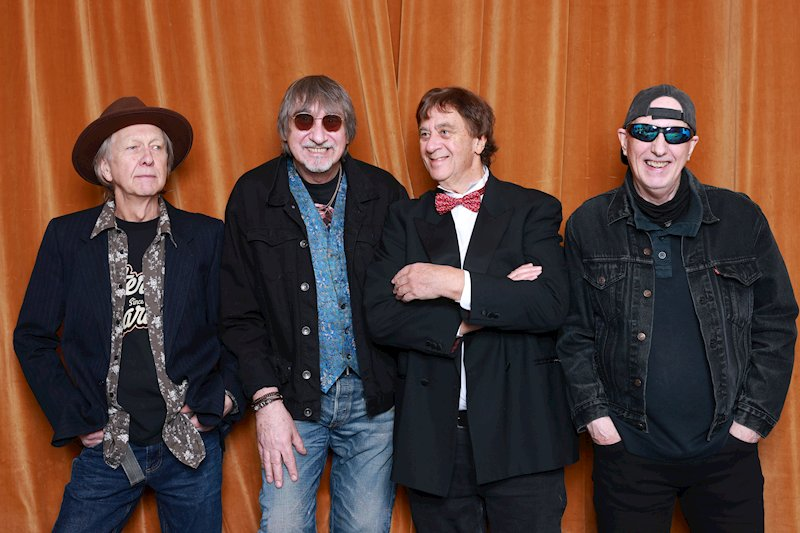
The Tirith are:
Tim Cox – guitars
Dick Cory – vocals, bass, acoustic guitar
Anthony Hill – keyboards
Paul Williams – drums, percussion
discography:
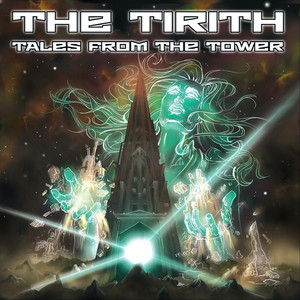
album

album

album
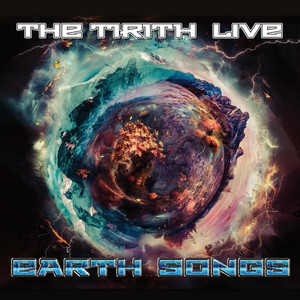
live album
British progressive rock veterans The Tirith continue their renewed creative journey with the release of their latest album ‘Quetzalcoatl‘, a record that brings together decades of songwriting experience, musical exploration, and a deep connection to the roots of progressive rock.
The album arrives following the release of the single and video ‘Dancing With Vampires‘, offering a first glimpse into a record built around contrast, atmosphere, and musical detail.
‘Quetzalcoatl‘ sees The Tirith combining progressive rock traditions with elements of folk, jazz, and heavier influences, creating a diverse yet cohesive collection of songs that balances complexity with strong melodic foundations.
Throughout the album, intricate arrangements and shifting rhythms meet more direct, emotionally driven passages.
Extended instrumental sections blend naturally with vocal-led moments, allowing each track to develop its own identity while remaining part of the larger musical journey.
The result is a record that rewards close listening, revealing new layers with every spin.
The roots of ‘Quetzalcoatl‘ reach back to the earliest days of the band’s history.
Founding members Tim Cox and Dick Cory first played together as schoolmates in the 1970s under the name Minas Tirith, before reconnecting decades later with a vast archive of material waiting to be revisited and transformed.
Many of these ideas, written across different stages of their lives, have now found their place within The Tirith’s evolving catalogue.
Since their return, the band have continued to develop their progressive identity through previous releases including ‘Tales from the Tower‘, ‘A Leap into the Dark‘, and ‘Return of the Lydia‘.
Each album has added another chapter to their musical evolution, with ‘Quetzalcoatl‘ representing a further expansion of their sound and vision.
The album reflects everything that defines The Tirith’s approach:
ambitious compositions, narrative structures, and arrangements that allow space for both intensity and subtlety.
Drawing from classic progressive rock while embracing a wider palette of influences, ‘Quetzalcoatl‘ finds the band at their most adventurous and refined.
With the album, The Tirith prove that progressive rock is not simply about complexity, but about creating worlds through music and ‘Quetzalcoatl’ is their latest journey into one of them.