Staying True: Why Compromise Was Never an Option
Interview with guitarist STEVE LYNCH (Autograph)
by Fok ’bs’

(via Facebook, used with permission)
“My two-handed tapping wasn’t just technique – it was curiosity, identity, and the desire to sound different.”
“It was never about competition for me – it was always about creativity.”

(via Facebook, used with permission)
“You reach a point where you realize you’ve created something that defines who you are – and that’s an incredible feeling.”
“I realized how dedicated I was only when I looked back – music was never a choice, it was who I am.”
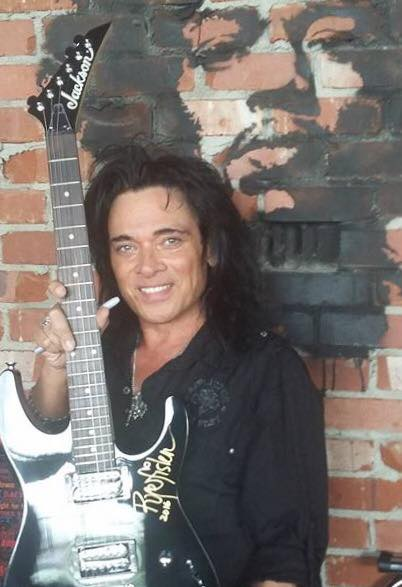
(via Facebook, used with permission)
“A solo should tell a story—beginning, middle, and end—not just show off technique.”
“Imperfection is what makes music human – too perfect, and it loses its soul.”
“Teaching is like giving someone a gift they can use forever – and it makes you understand your own playing even more.”
“The guitar has evolved, but every generation builds on what came before.”
“What still excites me is the challenge – to approach the guitar like a new friend every time.”
In this interview with guitarist Steve Lynch – best known for his work with Autograph and later projects like Network 23 and Blue Neptune – Fok ’bs’ dives into the mindset of a player who never followed trends, but instead built his own identity through innovation, instinct, and uncompromising creativity.
Looking back at your time with Autograph, do you feel the band was fully understood musically, or partly defined by the era it emerged in?
“Good question. I don’t think we were fully understood musically, and that is partially due to the fact that we were older musicians who’d been around for many years prior to Autograph. All of us had recorded albums, toured extensively, written several songs and had the experience of fairly seasoned pros before we became Autograph and signed with RCA. Therefore, I believe RCA and the audience didn’t quite know what to think of us. As a result, we were kind of stuck in the middle between a 70s/80s band, which makes sense because we were the same age or older than the members of Van Halen, so were influenced by 60s and 70s bands like they were, but were trying to fit into the shoes of an 80s band.”
The ’80s guitar scene was filled with strong personalities and virtuosos.
Did that environment push you creatively, or create pressure to stand out?
“I was only influenced by 60s and 70s guitar players, the last one was Alan Holdsworth. This is when I was attending the Guitar Institute of Technology in 1978. So I never felt any pressure from any of the 80s players, they came along later. I had my own style I was developing with the two-handed tapping technique while attending GIT so was concentrating more on that than anything else.”
Your two-handed tapping approach became a defining element of your style.
Did you originally see it as innovation, or simply a natural extension of your curiosity?
“All the above, it was a defining element of my style, an innovation, and an extension of my curiosity. As a rock guitarist through the 70s and then attending a jazz school towards the end of that decade it piqued my curiosity to try new things, sounds that I hadn’t heard before… and that’s what I wanted – to be different.”
Many guitarists become associated with a signature technique.
Has that ever felt limiting, or has it opened more doors than it closed?
“I never felt limited at all, probably because I didn’t care. To me, it was more about creativity than competition. I just wanted to keep expanding, and enjoying the ride while doing so.”
Technique can be practiced, but identity is harder to define – at what point did you feel you had found your own voice on the instrument?
“It was in 1978 when I was at GIT. I saw endless possibilities and felt my ever-growing knowledge of theory making it possible to access all the crazy things I was hearing in my head. Sure, there is a lot of practice involved, that goes without saying, but there comes a point where you realize you have created something that defines who you are, and that is a brilliant feeling!”
Your playing balances flash with musicality, how do you personally define the line between technical skill and expressive phrasing?
“I do this by writing solos without a guitar in my hands. I listen to the soundtrack over and over until I start hearing ideas for that particular song. It is then that I pick up the guitar to figure out what I’m hearing. To me, a solo is like telling a story, it has a beginning a middle and an end, and to accomplish this I let my mind and emotions take me where they will. This approach compels me to conjure up something that fits each song individually. I like to think of it like this – you wouldn’t want to write the same lyrics or melody line for a different song, so why would you use a guitar part that’s the same or similar to something you’ve done previously?”
As a teacher and author, you’ve influenced a generation of players.
Does teaching change the way you think about your own playing?
“It most certainly does, in a way that you’d never imagine. While teaching, you share your innermost knowledge of the instrument and creative process. This is personal, but feels really good to share, especially when it influences the student. It’s like handing them a gift they can use forever. It also allows you to take notice of what you’ve created when sharing your solo ideas and the theory behind them, and that can be very rewarding. I feel it’s an honor to share these things with everyone.”
In your autobiography, you reflect on both the triumphs and the struggles of your career.
Was there anything you only truly understood about yourself as a musician while writing it?
“There was. Towards the end of writing it, I came to the realization of how dedicated I was to continue on such an uncertain path even though there were so many obstacles. This proved my love and compassion for the guitar and music in general. This was who I am, and all I wanted to be… and I couldn’t have imagined it any other way.”
Collaboration often reveals new sides of a musician.
Was there a particular collaboration that challenged or changed you significantly?
“I believe that would be working with producer Andy Johns on the third Autograph album ‘Loud and Clear’. He challenged me by suggesting I play my solos slower and more bluesy. This was something I refused to do. I had all my solos ready to go and each was specifically written for each song. What he was asking was something that had nothing to do with who I was as a guitarist, and his suggestion would have changed the overall feel of the album. I politely kicked him out of the studio and recorded all my solos and other guitar parts without him or anyone else in the studio, it was just me and the engineer. It was at this time that I realized my style could not be compromised and I had to do things my way, or else it wasn’t me, it was just someone miming guitar parts written by the producer. After my parts were completed I invited Andy back into the studio to give a listen, and he was blown away! He said: ‘Perfect! Just like I told you to play Lynchy!’ We both had a good laugh about that one.”
When you listen to modern guitarists, do you feel the instrument has evolved, or simply shifted its focus?
“I definitely believe it’s evolved, but has also shifted focus as well. You see, the way I think of it is like this – There would not be an Eddie Van Halen, a Steve Vai, a Joe Satriani, or myself for that matter if it weren’t for our predecessors, the ones we listened to and learned from in our formative years. It’s the same for the next generation and the next after that. Our guitar heroes put it out into the ether and then we continued it, and it’s been continuing every since, as it should. Now the focus is not so much continuing on and expanding as their predecessors, but creating things that are completely new.”
In an age where digital tools can perfect performances, what role does imperfection still play in great guitar playing?
“Imperfection is what makes it human. If it’s perfectly recorded it begins to sound manufactured, there’s less feel to it, almost AI sounding. It’s good to capture the best performance on everything you record, but when you start correcting it by artificial means it becomes stale and the original emotion is lost.”
If you were starting your career today, with the current music landscape and technology, would your approach to guitar be different?
“Perhaps to a certain degree, but I would still want to be pure by being myself. I guess the main thing that would be different is the way I would approach songwriting itself, but not my guitar style or creativity. I would however let myself become a little more flexible.”
After decades of playing, exploring, and teaching, what still excites you most when you pick up a guitar today?
“The challenge that invokes me to try something different, to look at the guitar as a new friend who you want to get to know and see where that friendship takes you.”
From redefining technique to defending artistic identity, Steve Lynch’s journey reflects a lifelong commitment to authenticity – proving that true innovation comes not from following the moment, but from trusting your own voice.
by Fok ‘bs‘