Where Myth Meets Metal
American Female-Fronted Alt-Metal
SHINY NEW TOYZ
in conversation with Fok ’bs’
“Our mission is to craft immersive and dynamic musical arrangements and
live experiences that draw listeners inward, holding them in the stillness and intensity of the moment where sound becomes connection, presence, and transcendence.”
“For us, myths aren’t fantasy – they’re maps of the psyche.”

“Silence can be more confrontational than noise.”
“Real heaviness comes from truth, not posture.”
“When archetypal stories are grounded in real human experience, they stop feeling distant and start feeling immediate.”
“Genre is just the vehicle. Intention and emotional truth are the anchor.”
“When you release ego, the song tells you what it needs.”
“If the music creates even a moment of recognition or release, the ritual did its work.”

“If everything is loud, nothing lands.”
“The divine feminine we explore isn’t ornamental – it’s instinct itself.”

Some records feel like collections of songs.
Others feel closer to ceremonies.
With ‘Lore‘, Shiny New Toyz explore myth, archetype, and emotional transformation through a trilogy of songs that move between heaviness and stillness, ritual and reflection.
In this conversation, the band speaks with Fok ‘bs‘ about archetypal storytelling, mantra meditation, and the deeper intention behind the band’s evolving musical cycle.
‘Lore‘ feels less like an EP and more like an invocation.
Did you approach these songs as compositions – or as something closer to ritual?
“Our writing right now is very intentional around the number three. We’re creating three trilogies built around the idea of the trinity – three movements that explore a central theme from different angles. ‘LORE’ is the second trilogy in that sequence, following ‘Out to Get You’. Each set of three songs functions like a ritual progression: an opening, a confrontation, and a transformation. The trilogies themselves build on one another in a larger cycle where each movement feeds the next. The number three appears across many traditions – spiritual, mythological, and musical – and we’re leaning into that pattern as a way of structuring both the energy and the story of the work.”
The record channels mythic and archetypal imagery without becoming fantasy-driven.
How do you translate ancient symbolism into something emotionally immediate?
“For us, the myths aren’t fantasy – they’re maps of the psyche. Much of ‘LORE’ draws from the archetypal stories explored in ‘Women Who Run With the Wolves’ by Clarissa Pinkola Estés, the Jungian storyteller who illuminated the ‘Wild Woman’ archetype through traditional tales. Instead of retelling those stories, we step into the emotional movements within them and translate them through lived experience. The stories of ‘Skeleton Woman’, ‘Seal Woman’, ‘La Loba’, and ‘Bear Woman’ become lenses for understanding what people actually move through – loss of instinct, buried rage, reciprocity, and reclamation. When those archetypes are grounded in real human experience, they stop feeling distant and start feeling immediate. Much of that translation comes through the lyrical work of our vocalist. Her poetry is shaped by years of studying yoga, psychology, alternative medicine, world music traditions, medical anthropology, and spiritual healing practices. Those disciplines explore how humans move through suffering, transformation, and renewal. When those perspectives meet the archetypal myths, the result becomes a language for experiences many people feel but don’t always have words for.”
Suzie, your background in mantra meditation and Sanskrit chanting adds a distinct spiritual undercurrent.
How consciously do you integrate those practices into your vocal performance?
“Very consciously. The traditions of mantra meditation and Sanskrit chanting are built around story, vibration, and specific healing mechanisms, so that way of working with sound naturally informs how I approach vocals. Even when I’m not using a literal chant, the breath, repetition, and intention behind mantra practice shape the way I phrase and deliver lines. These three songs on ‘LORE’ don’t contain specific Sanskrit chants, but I’ve woven traditional yogic chants into other musical projects. In the third trilogy we’re writing, there is actually a piece that honors a yogic prayer directly. The influence is always present – sometimes structurally, sometimes spiritually – even when it isn’t explicit in the lyrics.”
The EP moves through grief, rage, reverence, and release.
Was that emotional arc intentional from the outset, or did it reveal itself during writing?
“It revealed itself. We didn’t map an emotional journey on a whiteboard. But when we stepped back, we realized the songs were moving through a very clear cycle: descent, confrontation, and integration. That arc mirrors real transformation. You don’t skip the rage to reach the peace. You move through it.”
There’s a strong sense of the divine feminine in ‘Lore‘, but without softness or cliché empowerment tropes.
What does power mean to you in this context?
“Power, in this context, is much closer to what Clarissa Pinkola Estés describes as the ‘Wild Woman’ – instinctual, enduring, and rooted in truth. The archetypes shaping ‘LORE’ – ‘Skeleton Woman’, ‘Seal Woman’, ‘Bear Woman’, and ‘La Loba’ – move through death, instinct, rage, endurance, and resurrection. They confront what has been buried, reclaim what has been taken, and restore what has been broken. These stories carry psychological and spiritual weight that has guided people through grief, survival, and transformation for generations. That’s the terrain we’re working in. The divine feminine here isn’t ornamental or slogan-driven. It’s instinct itself – the Wild Woman who knows how to endure, set boundaries, gather the bones, and return to her own nature.”
Your music balances crushing heaviness with moments of stillness.
Do you see silence and space as equal forces to distortion and volume?
“Absolutely. Space is tension. Silence can be more confrontational than noise. If everything is loud, nothing lands. Stillness gives distortion weight. It’s breath in and breath out – without the quiet, the heavy has no gravity.”
Shawn and John, your guitar interplay feels like tension between discipline and experimentation.
Is that contrast deliberate – or simply the natural friction of your personalities?
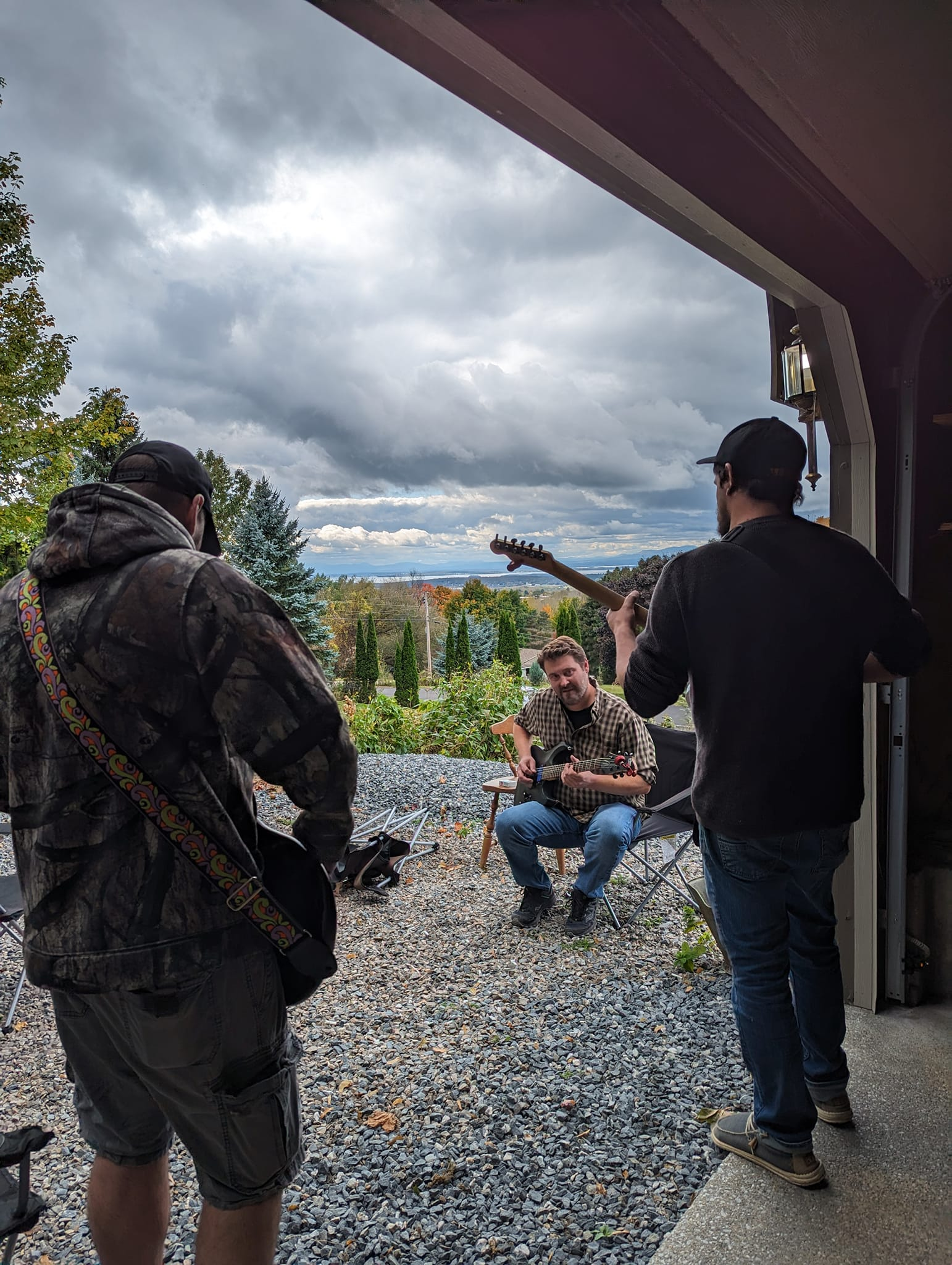
“It’s both. We approach tone, structure, and writing from different instincts, and that creates a natural friction. Instead of smoothing that out, we lean into it. Discipline keeps things grounded while experimentation cracks them open, and that tension creates movement in the music. At the same time, there’s deep respect between us for each other’s craft. We genuinely admire the way the other hears and builds music, and that respect pushes us to stretch further than we might on our own. It’s less about competing ideas and more about letting those differences inspire something stronger together.”
Alternative metal often risks becoming stylistically undefined.
How do you maintain cohesion while embracing progressive shifts and genre fluidity?
“We anchor everything in intention and emotional truth. Genre is just the vehicle. If the core feeling is honest, the shifts feel earned instead of random. We’re not chasing trends – we’re following the internal logic of the song. That consistency of purpose keeps it cohesive.”
Compared to ‘Out to Get You‘, ‘Lore’ feels deeper and more inward-facing.
What personal transformations shaped this evolution?
“That evolution comes directly from our vocalists personal journey. I’ve been journaling since I was very young, and looking back, those entries read like guideposts. Many of them feel almost prophetic – foretelling events in my life and offering an instinctual guidance that helped me move through trauma, confusion, and transformation along the way. That process shaped the structure of the music. ‘Out to Get You’ begins the cycle – being born into the chaos of the world and starting to recognize both the external madness and the internal landscape. ‘LORE’ moves further inward, grounding in those ancient patterns and the work of confronting what has been buried. It also draws on the stories of those who came before, their patterns mirroring and guiding my own journey. Each trilogy builds on the last as part of a larger cycle that gradually moves toward deeper clarity, healing, and growth.”
Many heavy records externalize anger.
Yours often turns inward, confronting shadow with clarity.
Is vulnerability a risk in metal – or a necessity?
“It’s both – and that’s why it matters. Vulnerability can feel dangerous in a genre built on strength and aggression. But real heaviness comes from truth, not posture. If you’re unwilling to look at your own shadow, the rage stays surface-level. Depth requires exposure.”
Vermont is not typically associated with extreme metal scenes.
Does geographic distance from major hubs give you freedom – or isolation?
“Mostly freedom. There’s less pressure to fit into a scene or a sound. Vermont has its own wildness – long winters, isolation, landscape – and that energy seeps into the music. We’re not trying to compete with a city. We’re building something rooted where we are.”
Your writing process is described as presence-based and collaborative.
Have there been moments where surrendering control led to something stronger than intention?
“Many times. Some of the strongest moments on the EP happened when someone stopped trying to ‘win’ an idea and simply listened. When you release ego, the song tells you what it needs. Surrender isn’t passive – it’s attentive.”
If ‘Lore‘ is an offering – what do you hope listeners leave behind after experiencing it?
“We hope they leave behind whatever they’ve been carrying that no longer serves them – unspoken grief, suppressed rage, old narratives. If the music creates even a moment of recognition or release, the ritual did its work. The bones of the old stories are still breathing.”
For Shiny New Toyz, music is not simply performance but a process of transformation.
Through archetypal storytelling, emotional confrontation, and moments of deep stillness, the band continues to build a cycle of songs that move beyond genre toward something more experiential.
If ‘Lore‘ is an offering, it invites listeners not just to hear the music, but to step inside it – and perhaps leave something behind in the process.
by Fok ‘bs‘
American Female-Fronted
Alternative Metal Band
SHINY NEW TOYZ
Has Released EP
‘Lore’
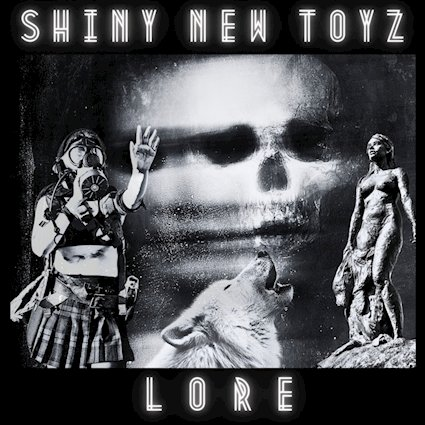
track-list:
Illusion
Sign of the Times
Arrow

Shiny New Toyz are:
Suzie Tremblay – vocals
John Notaro – guitar
Shawn Toussaint – guitar
Brad Woodward – bass
Forrest Thomas – drums
discography:

EP
With ‘Lore‘, Vermont’s Shiny New Toyz step fully into their power.
The band’s sophomore EP is not merely a collection of songs, but an immersive, ritualistic experience – one that moves through grief, rage, reverence, and release with fearless intensity.
Drawing on mythic archetypes and the echoes of traditional folklore, ‘Lore‘ feels ancient and immediate at once, channeling the divine feminine without softening its edge.
It is majestic yet unfiltered, brutal yet deeply sacred.
Musically, the EP pushes beyond easy categorization.
Crushing metal riffs collide with post-hardcore urgency, progressive time shifts, and alternative rock textures.
Tracks like ‘Elysium‘ and ‘Veil of Shadows‘ reveal a band unafraid of dynamic extremes – moments of meditative stillness giving way to explosive catharsis.
The result is a soundscape that feels alive and dimensional, anchored in heaviness but constantly reaching outward.
At the center stands vocalist Suzie Tremblay, whose presence shapes the emotional gravity of the record.
Her voice can roar with feral force, wrap melodies in warmth, or drift into a near-meditative calm.
There is a spiritual undercurrent to her delivery – an integration of lived experience, poetic honesty, and her background in mantra meditation and Sanskrit chanting.
Rather than hiding behind abstraction, her lyrics invite listeners inward, confronting shadowed spaces with clarity and compassion.
The instrumental backbone of Shiny New Toyz is equally formidable.
Guitarists Shawn Toussaint and John Notaro form a compelling creative tension – Toussaint’s disciplined precision and melodic strength meeting Notaro’s experimental, progressive edge.
Together, their interplay creates evolving musical landscapes where groove and exploration coexist.
Beneath them, Brad Woodward’s bass lines provide weight and contour, functioning as both rhythmic engine and melodic thread, while Forrest Thomas drives the songs forward with intricate, pounding rhythms that feel as organic as they are unpredictable.
The band’s creative philosophy mirrors the music itself.
Their writing process, as they describe it, is rooted in presence, connection, and exploration – songs built collaboratively, shaped by lived experience, experimentation, and the spontaneous energy of the room.
That balance between intention and play gives ‘Lore‘ its pulse;
nothing feels forced, yet everything feels purposeful.
Shiny New Toyz first introduced their sonic identity with their debut EP, ‘Out to Get You‘, which blended driving metal intensity with an alternative edge and progressive undertones.
Where that release confronted inner chaos with resolve and resilience, ‘Lore‘ expands the emotional terrain, deepening the band’s narrative scope and spiritual resonance.
Emerging from Vermont with a sound that transcends genre boundaries, Shiny New Toyz are carving out a space that is unmistakably their own.
‘Lore‘ marks a defining chapter – an offering that resonates on a human level and affirms that metal can be both crushing and transformative.